While wandering through an upscale shopping mall in Barbados, I was suddenly drawn to a small shop. The sign read: “Singapura”.
Inside, I could see some canned goods and packs of dried food, most probably from South-East Asia. I glanced at my watch. It was five minutes to six, which was almost closing time.
The two Creole women working there still greeted me with bright smiles:
“How can I help?”
I asked casually, “Is the owner Singaporean?” They pointed toward the office inside. “Yes.”
I leaned in. “Hi, how are you? I’m Leesan from Kuala Lumpur.” The owner looked up and without missing a beat, replied: “Apa khabar? I’m Nyonya from Singapore.”
In that instant, distance and time zones vanished. We chatted in English and Malay, one sentence after another, warm and familiar like old friends. Her name was Dora. She has lived in Barbados for over 30 years, anchoring the flavours of South-East Asia in a corner of the Atlantic.
The world is vast, yet at certain times, it becomes very small.
The mention of “Nyonya” brought to mind my former personal assistant, Wendy, a Melaka Nyonya. She spoke no Mandarin, yet her Hokkien was flawless.
Malaysian tour guides often tell visitors about the old “Straits Trio”: Singapore, Melaka and Penang. It was these three ports that gave rise to a unique community – the Baba and Nyonya. To this day, they hold fast to their culture, attire, and cuisine. I’m especially fond of Nyonya kuih and cendol.
Five hundred years ago, what we now call Mesoamerica – which includes present-day Mexico and parts of Honduras and Belize – was the world of the Maya. After Spanish invasion, rule, and assimilation spanning three centuries, the Mestizo folks emerge. This are people of mixed European (usually Spanish) and Maya heritage.
After centuries of evolution, genetics shifted; today, many Mestizo people are shorter in stature, lighter-skinned and have refined features.
During the colonial era, to fuel large-scale cane plantations in Central America, the Spanish brought in large numbers of enslaved Africans. The descendants of Africans and Europeans came to be known as Creole – deep brown skin, and with striking features.
Though they are common throughout Spanish-speaking Central America, in Belize, their Creole ancestry traces back to the British instead.
In Jamaica, I met two e-hailing drivers, both of whom were Creole. One was an active-duty soldier, the other was formerly with the foreign ministry. I invited them to dinner.
At the table, I asked if they knew which generation of Creole they were. Both have no clue. I also asked where the term “Creole” came from. They shrugged – no idea either. Fair enough. Ancestors from centuries ago hardly had time to leave footnotes for their descendants.
The greatest legacy of colonialism was never bloodlines, but language and religion. It was this shared framework that allowed different peoples to coexist within a common culture.
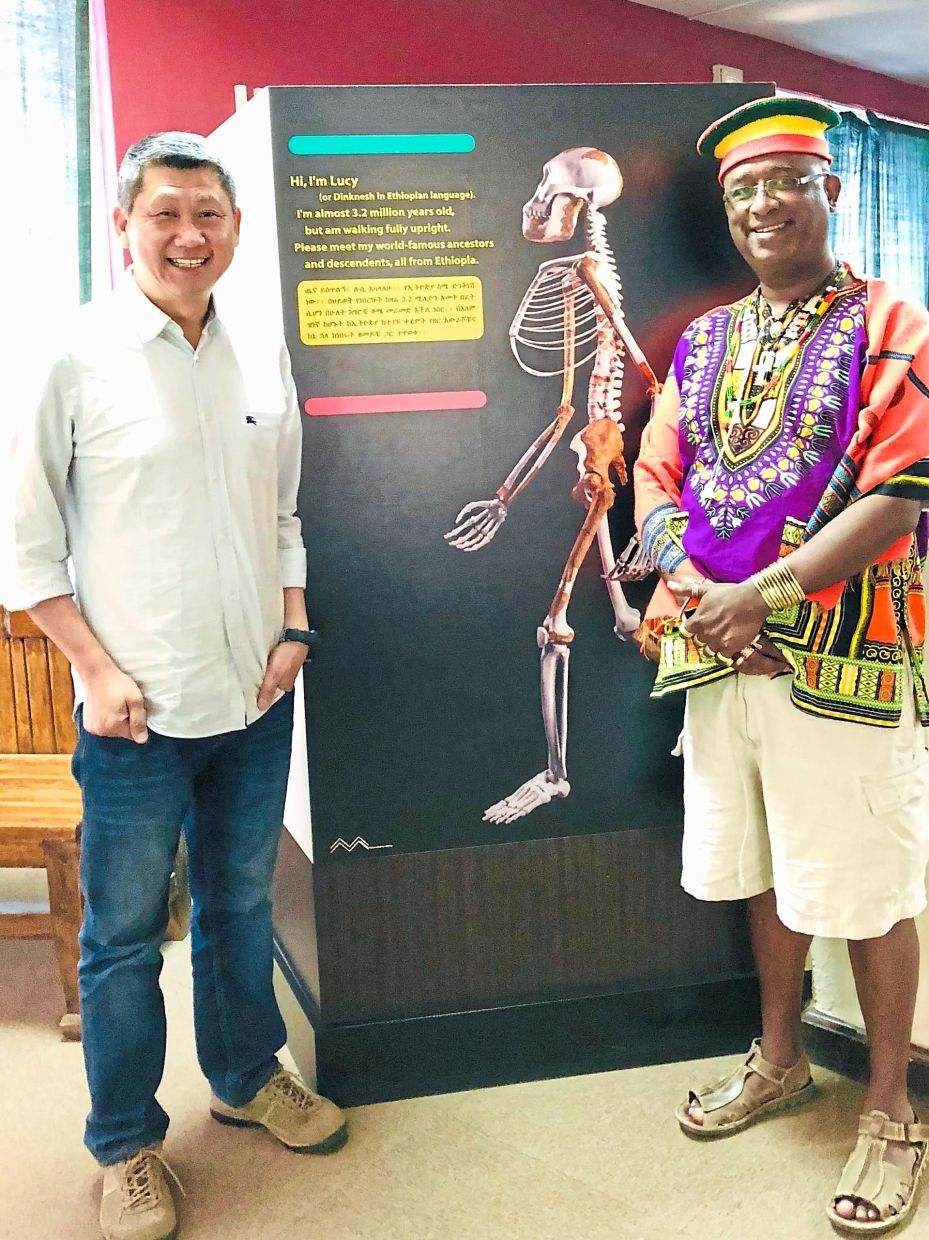
Push the clock back further, and Africa becomes the true starting point of humanity’s mixed heritage. East Africa is the cradle of modern humans; at the National Museum of Ethiopia, you will find Lucy, “our” 15-year-old ancestor from millions of years ago.
Later, Africa’s many peoples repeatedly merged through migration, trade, and marriage. Along the East African coast, the Swahili emerged from African natives and Arab traders.
In South Africa, the community blends African, European, and even Malay and Indian ancestry. In North Africa, the Berbers are the product of millennia of interwoven Arab and Mediterranean European bloodlines.
Rather than asking whether Africa has “mixed heritage”, it’s more accurate to say this is where humanity first learned to live together – the African continent itself.
Zoom out to the globe and similar stories are found everywhere. In Latin America, Mestizo, Afro-Latino and other bi-racial terms can be found in many social structures. Do note, though, that some of these terms are no longer used as they are considered highy offensive.
In South-East Asia, the Baba Nyonya and Eurasians are the natural outcome of maritime trade and long-standing intermarriage. In South Asia, the “Indian” identity itself is a repeated fusion of Central Asian, Persian, and South Asian Indigenous peoples.
In West Asia and the Mediterranean, there are the Levantines. North Africans, southern Europeans, and even the Inuit within the Arctic Circle carry blended ancestries.
As for Northern Europeans, those lines have been mixed beyond untangling, blurred into ambiguity.
Even Europe, so often mistaken as “homogeneous”, never was. The Balkans blend Slavic, Turkish, and Greek bloodlines. Southern Spain and southern Italy bear long-standing genetic traces from North Africa and West Asia. The idea of “purity” is largely a modern nation-state narrative – a convenient fiction.
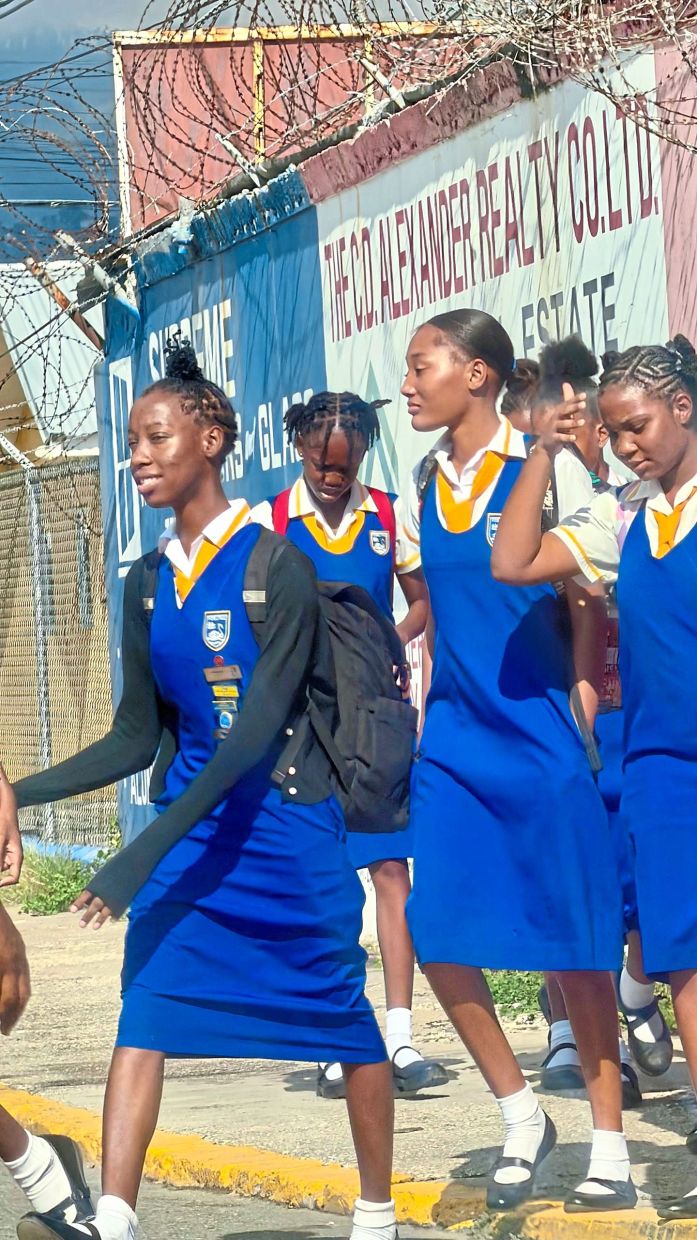
Back in the Caribbean, most island nations are predominantly Creole, with Trinidad as the notable exception. Here, the combinations are complex yet ordinary: Indian with Chinese, Indian with British, Indian with Creole – nothing unusual.
I know a driver named Roddy who looks unmistakably Asian. He laughed and explained: his father is Chinese, his mother Indian, with European ancestry on her side. In Trinidad, he’s known as a Trinidadian-Chinese. Their communities are fully integrated into the national fabric – prime ministers and ministers alike.
People often say, “different land nurtures different people”. Then what about the mixed heritage of Chinese and Malays? What truly defines a people has never been bloodlines alone, but the times, the environment, and how people live together, grow old together, and build a harmonious society as a shared community.
Thinking back to that little shop in the Barbados mall labelled, “Singapura”, I realised something: history never separated us – it has always kneaded us together.
Language, belief, food, and habits were rearranged and merged through migrations and encounters, eventually forming who we are today. And as the world came to define borders by geography and nation-states, what people now cherish most is the pride in being “nationals” – a sense of belonging, of where the heart finds its home.
I am Malaysian.
Humanity has never been “singular”.
And it is precisely this lack of singularity that makes world civilisation still worth carrying forward.
Ps: Every group I mentioned ... I have met them all, spoken with them, and even briefly stepped into one another’s worlds.
The views expressed here are entirely the writer’s own.
Leesan, the globe-trotting traveller who has visited seven continents, including 164 countries and territories, enjoys sharing his travel stories and insights. He has also authored six books.