


One of the beaches in the Le Morne area in Mauritius. — Photos: TOOFAN MAJUMDER
As my flight prepared to land at Sir Seewoosagur Ramgoolam International Airport in Mauritius, my eyes turned to the window, where I saw countless pointed mountains bordered by the sea.
Located far out in the Indian Ocean, the island of Mauritius was once home to the dodo, a flightless bird that, without natural predators, had grown fearless and unwary. However, its peaceful existence ended with the arrival of humans, who hunted the bird and introduced invasive species like rats and pigs that preyed on the dodo’s eggs.
The dodo, unprepared for these new threats, was driven to extinction within a century, becoming a tragic and iconic symbol of humanity’s devastating impact on fragile island ecosystems. Later, when I visited a museum in Mahebourg, I learned that many other birds on the island also went extinct for similar reasons.
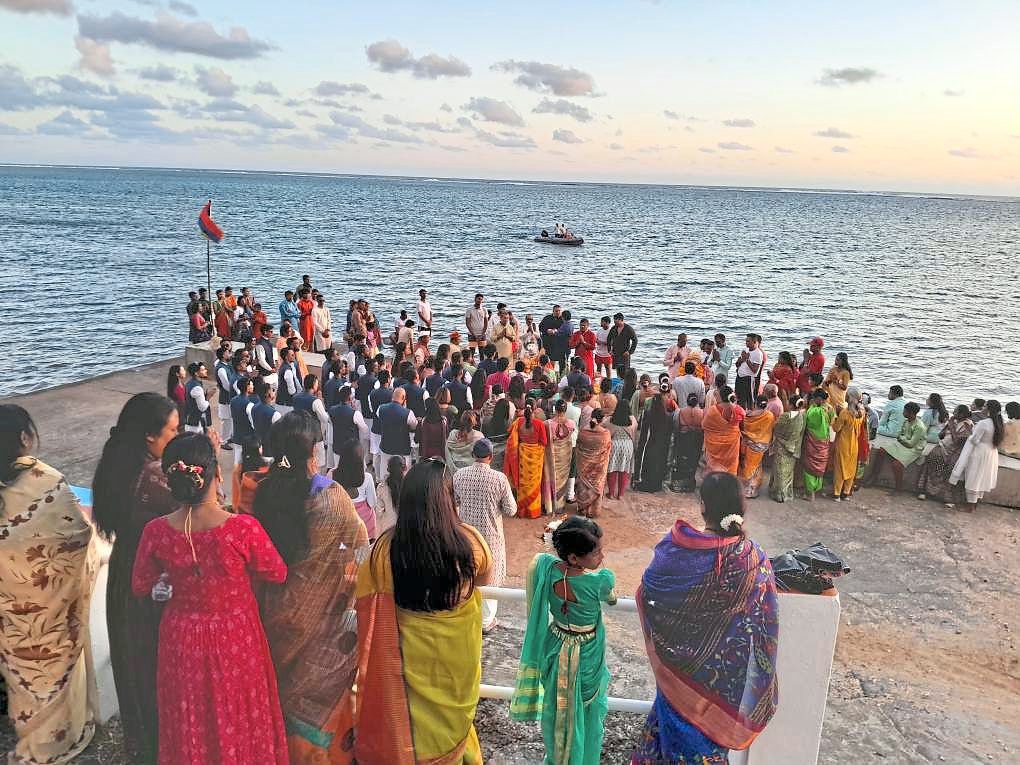 Some of the locals celebrating Ganesh Chaturthi Visarjan.
I visited a festival site, where I watched some people celebrate the Ganesh Chaturthi visarjan. In Mauritius, with its Hindu majority, festivals like these are celebrated with much grandeur. I also visited Rivière-des-Galets, a unique beach almost entirely composed of smooth pebbles, and the Maconde viewpoint, from which I witnessed a truly great sunset.
The next morning, I arranged to go on a seaplane tour over a waterfall. Located off the coast of Le Morne, this “waterfall” is actually an optical illusion, created by the constant, powerful movement of sand and silt down a deep ocean slope.
To secure a view of this mesmerising sight, however, you must book far in advance, as the tours are in high demand during peak seasons.
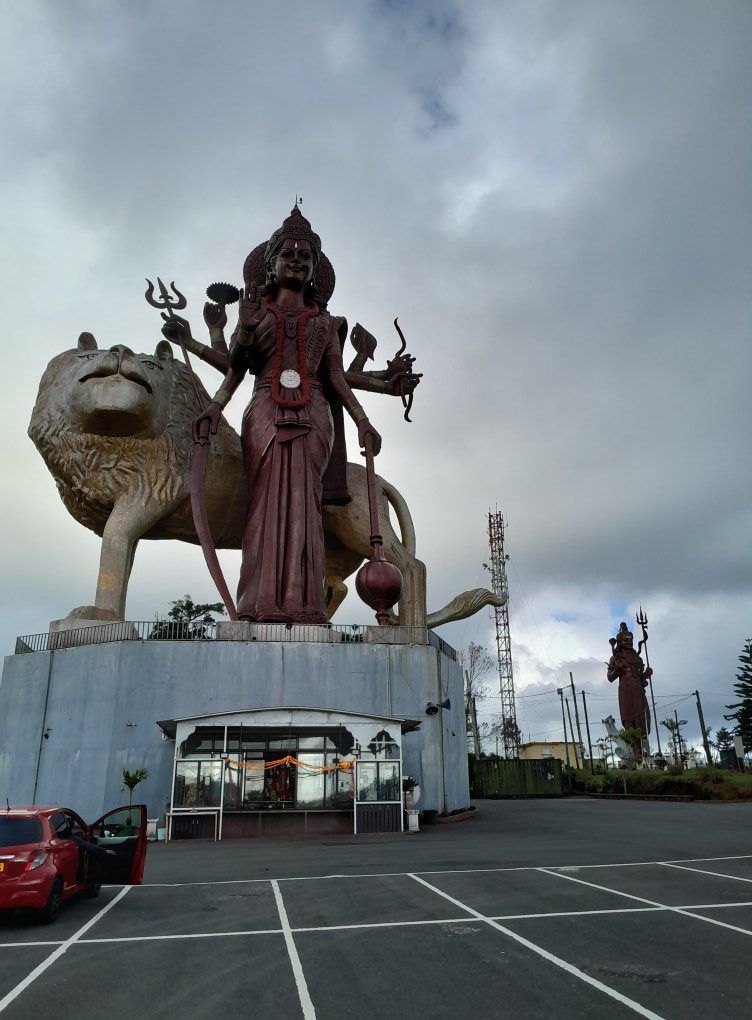 Ganga Talao is where the world's tallest Durga statue is found.
That same afternoon, I went to Ganga Talao to visit the world’s tallest Durga (a Hindu goddess) statue. I also visited the Seven-Coloured Earth at Chamarel, where I had the sweetest sugarcane juice from a nearby stall.
I dedicated the third day on the island to exploring Port Louis, the capital and largest city of Mauritius. I started with a visit to Aapravasi Ghat, a Unesco World Heritage Site that served as the main immigration depot for indentured labourers arriving from India, East Africa, China, and South-East Asia between 1849 and 1910. This site was pivotal to the British colonial “Great Experiment” to replace slave labour with contract labour after slavery was abolished in 1834.
Today, it is a historical museum and cultural centre commemorating this migration, which profoundly shaped modern Mauritian society. Descendants of these indentured labourers now comprise over 70% of the island’s population.
Mauritian food you need to try includes dhal poori, and alouda, a sweet and refreshing milkshake. Of course, there are more items to check out.
I also visited the Sir Seewoosagur Ramgoolam Botanic Garden, considered one of the finest in the world, and explored Cap Malheureux in the northeast, where I spotted an eel in the water.
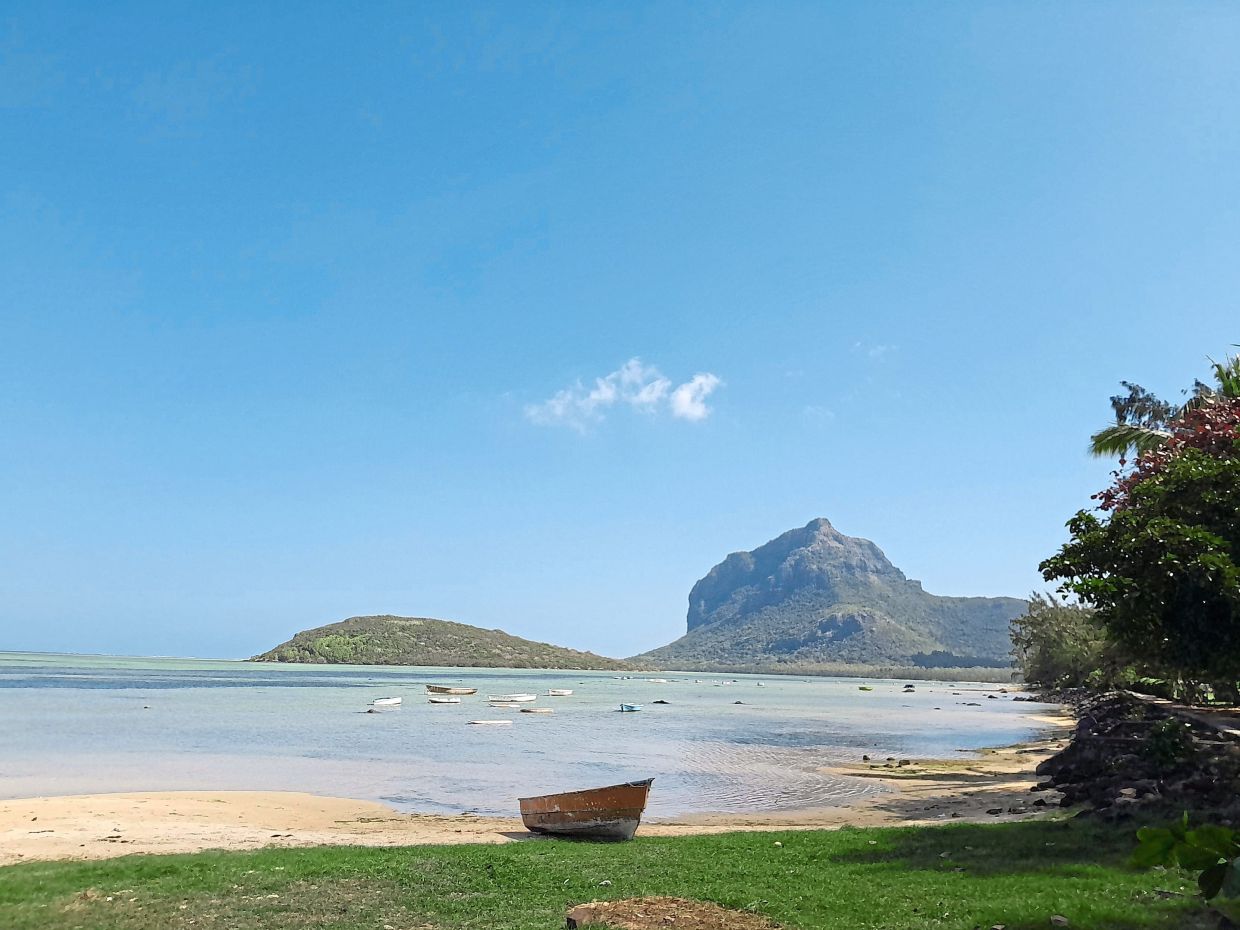 There are a number of hills and mountains like Le Morne (in the background) in Mauritius.
Since Le Morne mountain was not very far from my homestay, I started walking toward it. As I reached the foot of the mountain, I felt like I had to climb it, even though I was only wearing slippers. It was not the best footwear but I went ahead with my climb.
A legend associated with Le Morne says that escaped slaves took refuge on the mountain. After the abolition of slavery in Mauritius on Feb 1, 1835, a police expedition was dispatched to inform the former slaves that emancipation had made them legally free. According to the story, the slaves misinterpreted the arrival of the police at the base of the mountain. Fearing they were to be arrested, they chose to leap to their deaths into the ocean rather than be recaptured.
That night, I had venison for dinner, along with Mauritian ram which are considered local delicacies.
On my final day on the island, I decided to try the local public transport. I took a bus from the village stop near my accommodation to La Gaulette, where I visited a supermarket and had breakfast before venturing further to Mahebourg. This city is said to be the place where the Dutch first landed on the island.
Before heading to the airport, I made my final stop at Blue Bay. From there, I watched flights taking off for various destinations, as the airport was not far away. It was there that I befriended a Russian tourist who seemed mesmerised by the island’s beauty.
When I asked if he planned to return, he simply said, “The world is such a big place!” He was right, but I had left a part of me on that island and would definitely love to revisit Mauritius one day.
The views expressed are entirely the writer’s own.
