
Dome home, bubble home, shell house, airform house: Southern California architect Wallace Neff’s answer to post-World War II affordable housing was called many things.
Neff’s innovative "airform” construction used a giant inflated balloon topped with sprayed gunite (a type of concrete) to create a futuristic-looking dome very quickly and cheaply, as he sought to address post-war housing shortages.
The unconventional design was later abandoned and most of Neff’s airform homes have since been demolished.
The sole surviving bubble house in the United States is now for sale in Pasadena, California, listed at US$1.95mil (RM7.97mil). The home is listed by George Penner at Compass Real Estate, who admitted he’s never seen anything like it before.
"This is absolutely a unicorn, such a unique property,” Penner said, noting that numerous Neff bubble homes were built after World War II but this is the last known one in this country.
Neff, who is known for Spanish-Mediterranean-style estates created for Hollywood icons like Judy Garland, Groucho Marx and Charlie Chaplin, built this experimental home for his brother, Andrew Neff, in 1947.
The minimalist two-bedroom, one-bathroom home has 1,204sq ft (111.8sq m) of curved interior space and sits on a lot just shy of 9,000sq ft (836sq m). The property also has a 1,000sq ft (93sq m) detached studio (which is not a dome).
The home suffered some updates over the decades – including a modification of an interior wall – that altered the original curvy concept inside.
But it has since been lovingly restored by the current owners, media executive Priya Girishankar and her partner, tech entrepreneur Damon Cleckler. The couple bought the property in 2025 from Sari Takahashi-Roden, a friend and the widow of the couple’s close friend, Steve Roden, after the artist and musician’s untimely death.
Girishankar and Cleckler bought the house to complete Roden’s vision of restoring the house back to its original glory, curves and all, and then let it go.
"It just felt like the right thing to do,” Cleckler said. "It honours Steve’s memory, and preservation like this was something we all bonded over.” Completing the restoration begun by a dear friend became a labour of love.
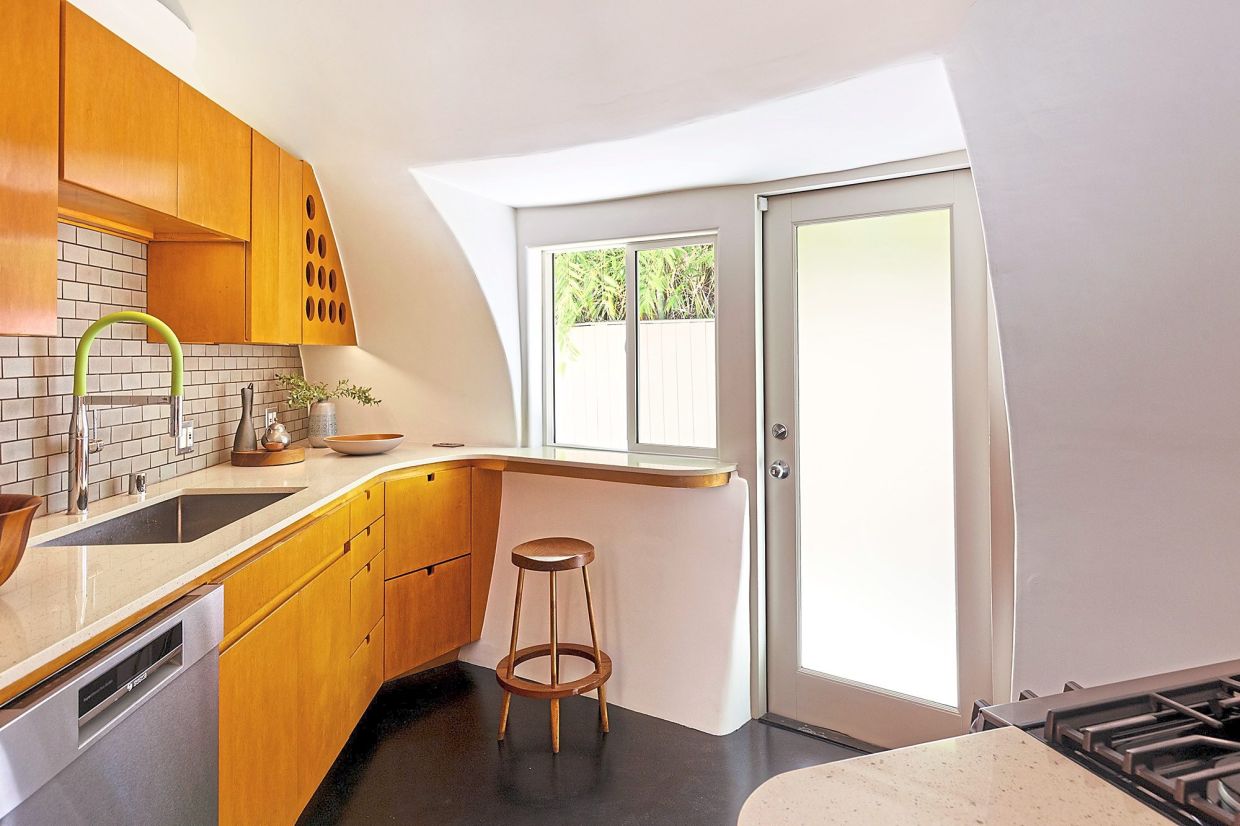
"We were able to bring some of those curves back. In the kitchen in particular,” Girishankar said. "This whole thing has been a real journey for us, and it’s as much about Steve as it is about our journey through the last year and a half with the house.”
"We’d lived many, many hours in that space with Steve and Sari, just hanging out, having dinners, listening to music,” Cleckler added.
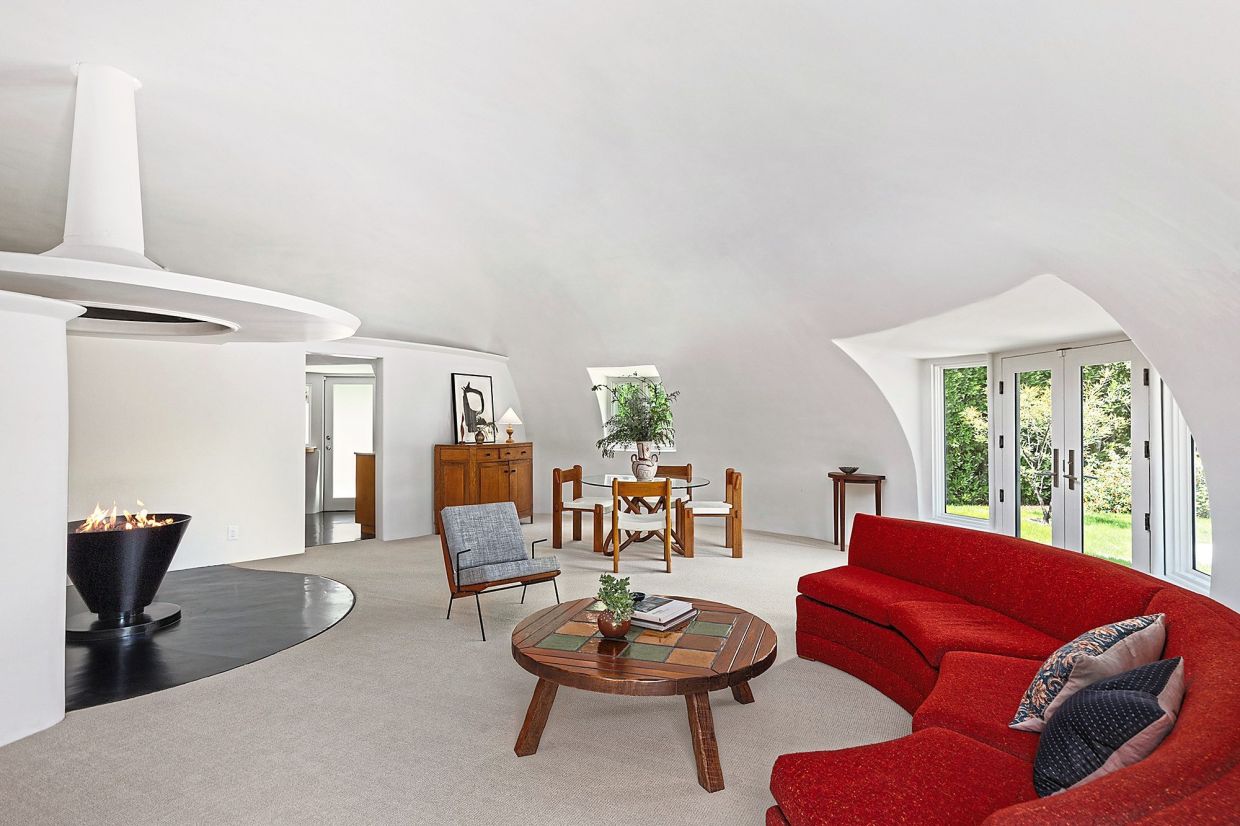
Being under the curved ceiling in the half-circular living room, relaxing by the central fireplace with its "floating" chimney, "is transportive”, Girishankar said. "It takes you to a different place."
The chimney is "cantilevered over a concrete plinth”, Cleckler added. "You can jump up and down on that thing. It’s incredibly solid. Yet it has this sensation of floating there.”
And then there’s a bomb shelter, which was added some 15ft (4.5m) below the studio in the early 1960s, a clear nod to the Cold War era, and using, "the same balloon and pneumatic-sprayed concrete approach”, Cleckler said.
"When Steve first bought the house and hadn’t even moved in, he and I went down there and recorded music for a couple of hours one night. It’s a great space and someone creative might turn it into a wine cellar or something.”
The galley kitchen is compact, something the couple learned to live with in their previous midcentury home in Altadena, which they restored and lived in for over 20 years. That house was designed by architect Gregory Ain, but it burned down in last year’s Eaton fire.
"You learn to respect the space if you have a house like that. You can be really creative with the space and make it work,” Girishankar said.
Neff considered the bubble houses his greatest achievement. So why were his dome homes torn down? The minimalism and spatial efficiency challenge some, and most people are accustomed to living in "90° angled, box-shaped rooms,” Penner said.
"It’s not for everyone,” he said. "But when you’re inside, what’s so fabulous is it has a sense of artistry and calmness and serenity.”
For Girishankar and Cleckler, after losing their friend, Roden, and then their own home, the renovation process at the dome house was incredibly healing, they said.
"This came to us not because it was intentional and planned out, it just happened,” Girishankar said. "I was over there today looking at it and I just feel a lot of joy about it, because the house feels happy.” – ©2026 The New York Times Company