Sixty-six years ago, on the night of June 7, I had an encounter with fate that would remain with me for the rest of my life. Although I did not realise it then, that encounter would establish an unexpected and treasured connection with Tunku Abdul Rahman Putra Al-Haj, our first Prime Minister and Father of Independence.
Two friends and I were returning to Alor Setar after spending the weekend in Penang when we came upon an accident. A vehicle had apparently left the road and landed in a paddy field.I stopped and parked before walking towards the scene. To my astonishment, I heard a groan. It was a man.
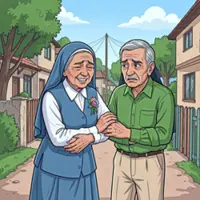
His body was covered in mud and blood, and it was immediately clear that he was seriously injured. Without hesitation, the three of us lifted him into my car and rushed him to Sungai Petani Hospital.
While waiting for the doctor, I searched his pocket for identification. I found his wallet, and inside was his identity card. The address stated on it was Rumah Merdeka.
We immediately knew what that meant. Rumah Merdeka was the Alor Setar residence of Tunku Abdul Rahman.
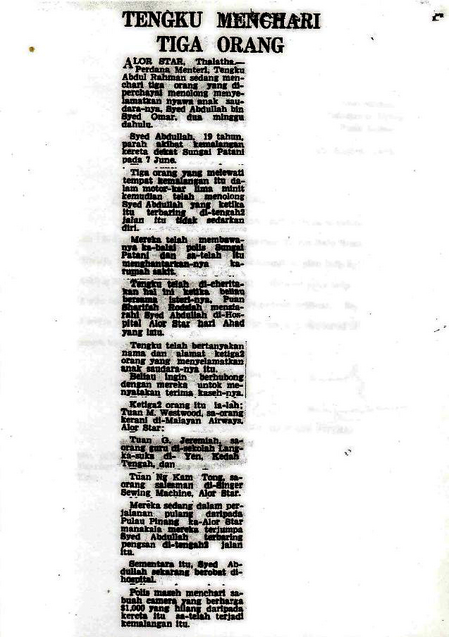
Some weeks after his return, a report appeared in Utusan Melayu with the words, “Tunku mencari tiga orang” – “The Tunku is looking for three people.”
I had no idea that the three people he was seeking were my two friends and me. I only discovered this many years later, when my cousin in Melbourne sent me a newspaper clipping of the report.
One day, while I was teaching, my headmaster suddenly came running into my classroom to tell me that three policemen were waiting to see me.
My heart skipped a beat. My immediate thought was that I must have committed some traffic offence. At the time, I drove every day from Alor Setar to Yan village.
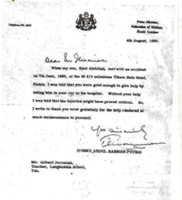
When I approached the officers, however, the Sergeant gave me a crisp salute and handed me an envelope. He told me it was from the Prime Minister's office.
Inside was a letter from the Tunku himself, thanking me for the assistance I had rendered to the injured man.
I felt deeply honoured. The fact that the Tunku had taken the trouble to find the three of us and personally convey his appreciation was something I would never forget.
Sadly, both of my friends have since passed away. One of them, ironically, was himself killed in an accident.
Although I did not meet the Tunku personally at the time of the accident, life eventually gave me several opportunities to know him through something we both loved dearly – horses and horse racing.
The Tunku was well known as an enthusiastic racing fan and owned several horses that competed professionally. Some horses that were not performing particularly well on the professional circuit were sent to the Kedah Gymkhana Club, where I was given the opportunity to re-school and race them in the amateur circuit.
One horse stands out in my memory: Tentram. He had been particularly troublesome in professional racing because he simply refused to enter the starting barriers.
I eventually managed to re-school him and was fortunate enough to win three races on Tentram for the Tunku. The greatest victory came at the Singapore Turf Club.
After the race, I was summoned to the general manager's office. I wondered what I had done wrong. Instead, I was told that the Tunku was on the telephone and wished to speak to me.
He congratulated me warmly. I remember him telling his friends that he did not think Malek would have brought his horse all the way from Alor Setar to Singapore if he did not believe it had a chance of winning.
Those words meant a great deal to me.
Later, when an opportunity arose for the position of racing official, I went to the Tunku and told him I wished to apply.
He took out his old-fashioned typewriter and began typing a recommendation for me, initially chiding me because he had already written a recommendation for another candidate. But, being the person he was, he immediately telephoned the Totalisator Board, withdrew his recommendation for the other candidate and wrote one in my support.
I eventually obtained the position with the Malayan Racing Association, after three decades in the teaching profession.
From then on, I had the privilege of meeting the Tunku on many occasions. We would often reminisce about his racing days, his horses and the world of horse racing that he loved so dearly.
The Tunku's greatest achievement in horse racing came through his association with the famous racehorse Think Big, which he co-owned with the late Tan Sri Tan Chin Nam.
Think Big won the Melbourne Cup twice, in 1974 and 1975. The Melbourne Cup is one of Australia's greatest sporting occasions, famously known as “the race that stops a nation.”Looking back after 66 years, I realise how extraordinary the journey has been.On that night in June 1959, I was simply a young man returning home from Penang with two friends who stopped because we saw an accident. We had no idea who the injured man was, nor could we have imagined that our simple act of helping a fellow human being would somehow bring us to the attention of the Prime Minister of our newly independent nation.As I approach 90, this memory has become more than a story from my younger days. It is a small personal chapter in the larger story of our nation.
Perhaps that is why I feel compelled to record it now, in remembrance of the man who became our first Prime Minister and Father of Independence.
I consider it one of the greatest privileges of my life that, through horses, racing and a remarkable twist of fate, my journey crossed that of Tunku Abdul Rahman.