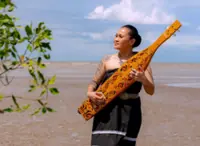
Gloria Lirek Joseph, 26, is proud of her Orang Ulu roots and wants more people to appreciate one of the most beautiful aspects of her community's heritage - the sape.
The Sarawakian student at Tung Shin Academy of Nursing in Pudu, Kuala Lumpur believes it is important to preserve the traditional instrument to keep indigenous musical heritage alive and relevant today.
"If the younger generation does not learn it, in years to come there will be no young sape players, and eventually no sape makers left," says Gloria, who was among the performers at the Borneo Native Festival (BNF) that took place from May 22-24 at Central Market in Kuala Lumpur.
BNF was held ahead of the annual Kaamatan and Gawai festivals, celebrated annually in Sabah on May 30-31 and in Sarawak on June 1-2, respectively.
Gloria is one of 30 sape ambassadors under Kuching-based Yayasan Perpaduan Sarawak (YPS). She was among 15 performers from the non-profit organisation who took part in free sape clinics and jamming sessions during the festival.
The ambassadors comprise young individuals from diverse ethnicities, including Malay, Chinese, Orang Asli, Kadazan and Bidayuh, who are learning the sape and incorporating it into their wider musical repertoire.
Bringing Bornean culture to life
Despite the heavy downpour over the weekend, the festival attracted thousands of visitors eager to experience traditional Bornean dances, ethnic costumes, live music performances and local delicacies unique to the region.
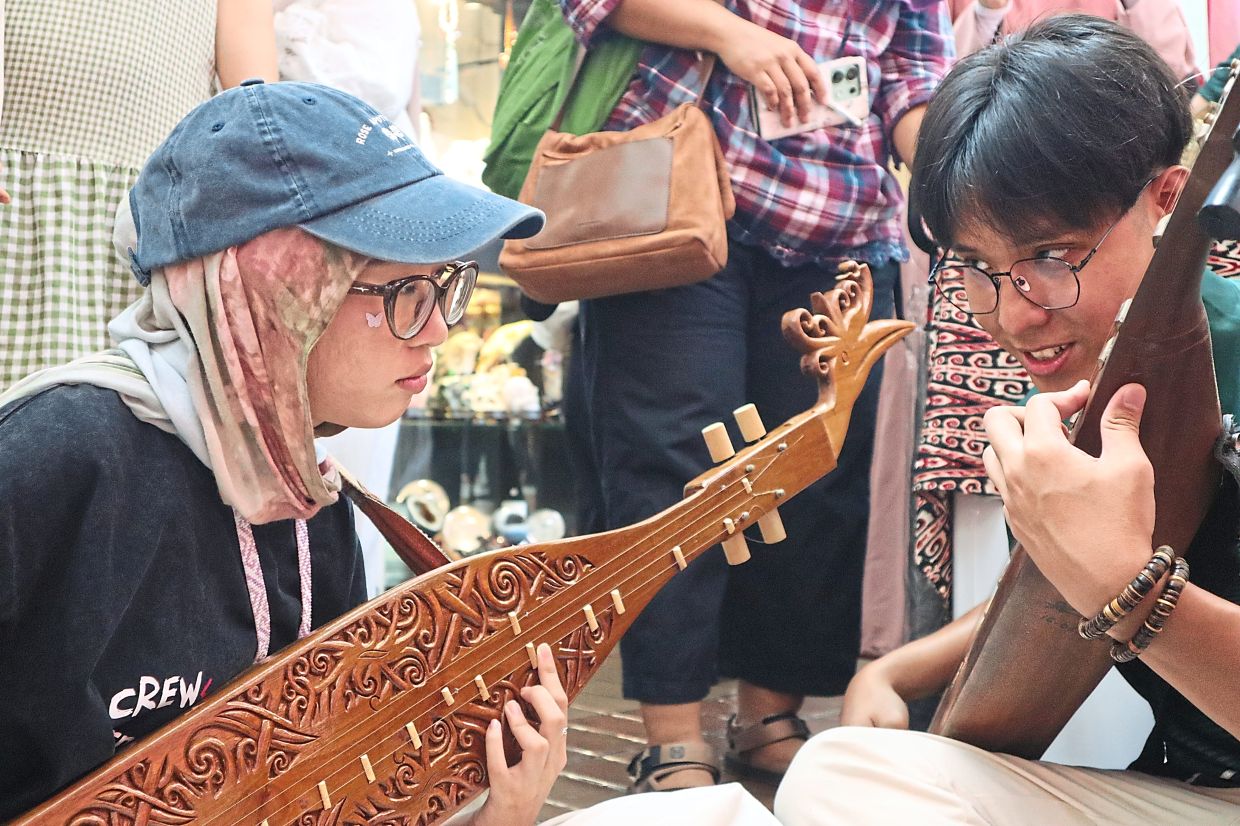
The interactive sessions allowed visitors to experience the sape up close while learning about its history, playing techniques, rhythms and cultural significance within Sarawak’s indigenous communities. This is Gloria's second year performing at the BNF.
"I really enjoyed the jamming and teaching sessions. It was especially encouraging to see so many girls trying out the sape and genuinely enjoying the experience," says Gloria, who comes from Data Kakus, a five-hour 4WD journey from Bintulu, Sarawak.
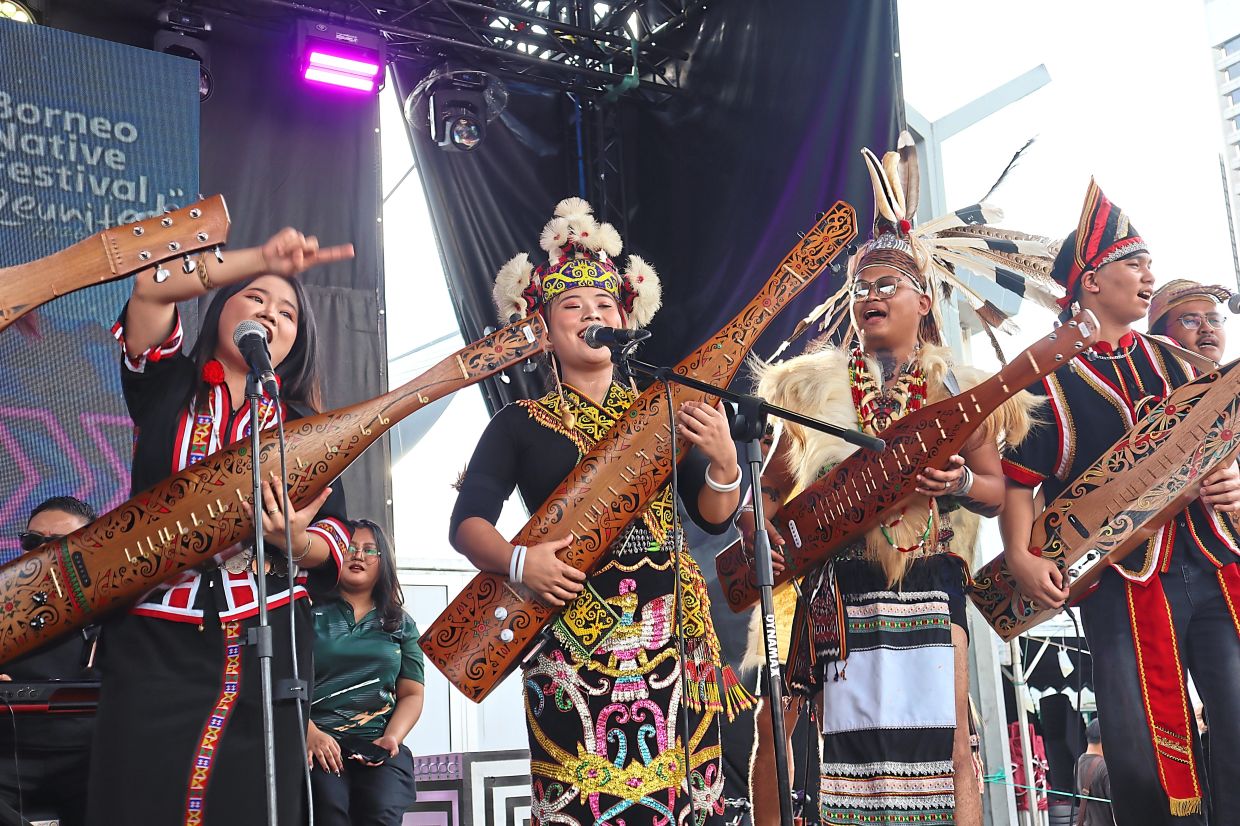
On Sunday (May 24), the ambassadors took the stage at BNF's "Rhythm of Unity" showcase, blending traditional sounds with youthful energy and a modern stage presence.
Soothing soundsThe sape is a traditional lute-like instrument played by Orang Ulu communities such as the Kayan and Kenyah in Sarawak, as well as Dayak communities in Kalimantan. Traditionally carved from the bole of Adau wood, the sape was once believed to possess mystical healing powers.
In the past, women were forbidden from touching the instrument.
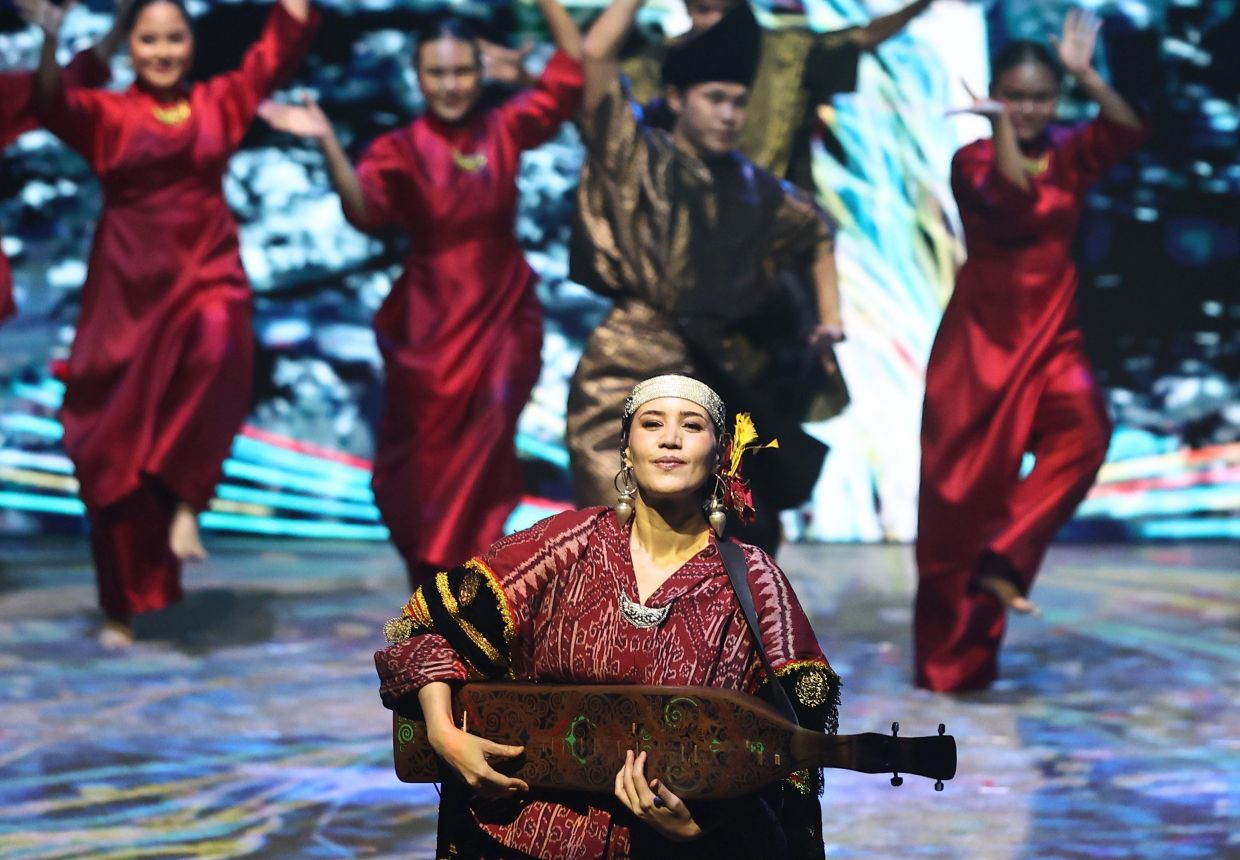
But things changed years ago when well-known musician Alena Murang, 37, became one of the first women in Sarawak to learn to play the sape. She picked up the instrument at around age 10 under sape master Matthew Ngau Jau.
Since then, many Sarawakian girls have followed suit, including Gloria. Self-taught, Gloria began learning the sape in 2019 by watching videos of sape masters on social media platforms such as YouTube and Instagram.
"Before learning to play the sape, I could already play the guitar. That made learning it easier because both use similar finger movements," she shares.
"There's something special about the sound of the sape. It's calming and soothing to the ears," says Gloria, who purchased her first handmade sape from a luthier in Sarawak.
Pushing for preservation
Even though the number of female sape players is growing, Gloria feels the instrument is still not among the most popular musical choices among youths, many of whom are more interested in modern instruments such as the electric guitar, drums and keyboard.
"In many rural areas in Sarawak, there is still a belief that girls should not play the sape. More awareness is needed to promote and preserve this traditional instrument," she says.
At the nursing academy, Gloria is doing her part to promote the beauty of the sape to fellow nursing students.
"I have 26 nursing course mates from different parts of Malaysia. Many of them are familiar with instruments like the guitar, drums and traditional instruments such as the kompang and gendang. But many have never seen the sape, let alone heard of the instrument.
"Sometimes, I play the sape for them. Many of my friends enjoy its soothing sound because it is relaxing. Slowly, I hope to showcase the beauty of my culture to more people," says Gloria, who has also taken on two online students under her wing.
In recent years, Alena, as well as Indonesian sape player Helmy Trianggara, have helped bring the instrument to wider audiences through social media platforms such as YouTube and Instagram.
On Spotify, Alena's compositions Liling and Lan E Tuyang have attracted a growing audience, while Helmy's Beautiful Land has been widely used in Sarawakian dance performances internationally.
Gloria agrees that online platforms have played an important role in introducing the sape to more people, especially among younger groups.
"I hope the sape will gain more recognition and be embraced by more women, and eventually reach an international stage. This is one way we can preserve our customs and ensure younger generations continue appreciating our traditional music."
Strings of heritage
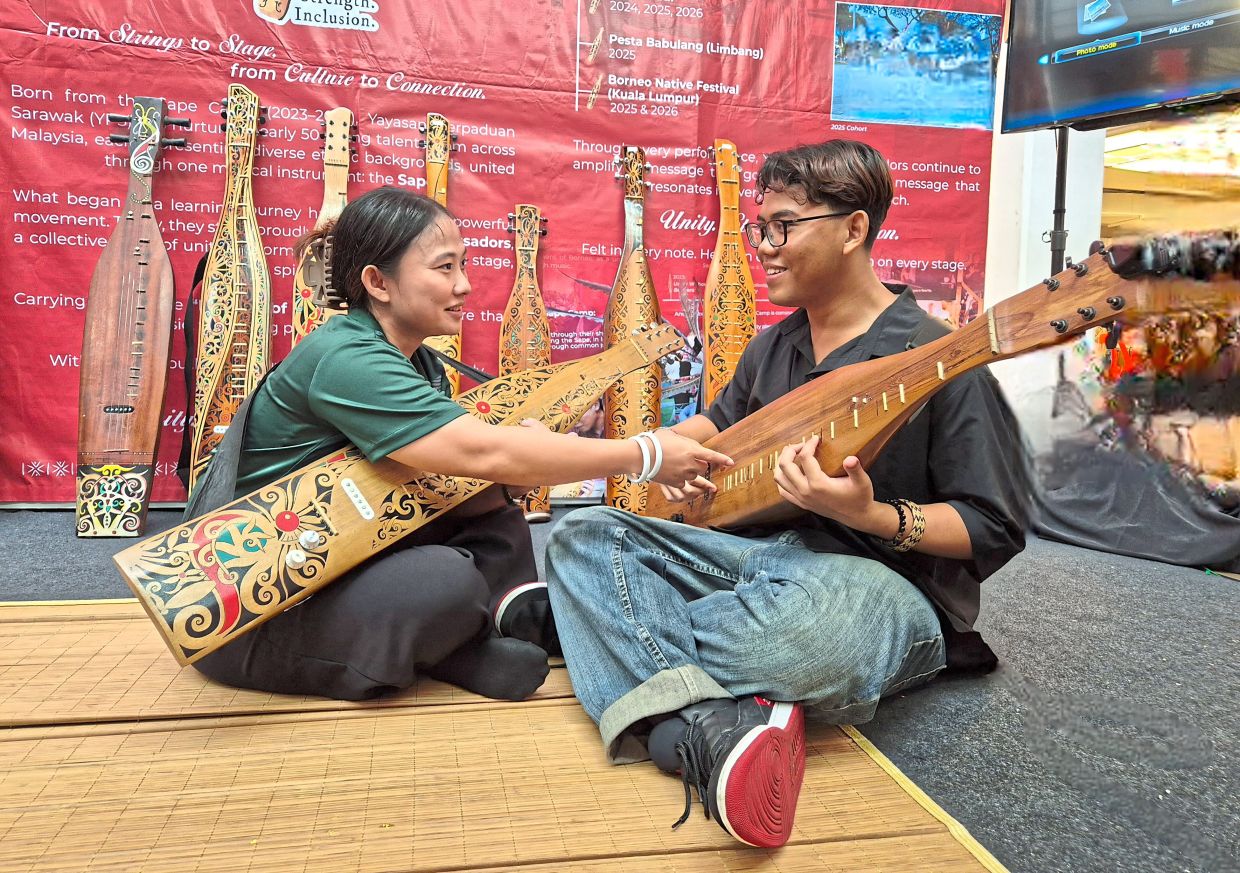
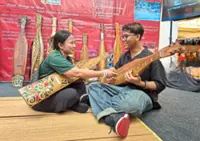
Gloria (left) and Orang Asli youth Roas Noah Zachery are sape ambassadors for Yayasan Perpaduan Sarawak. Photo: The Star/Sheela Chandran
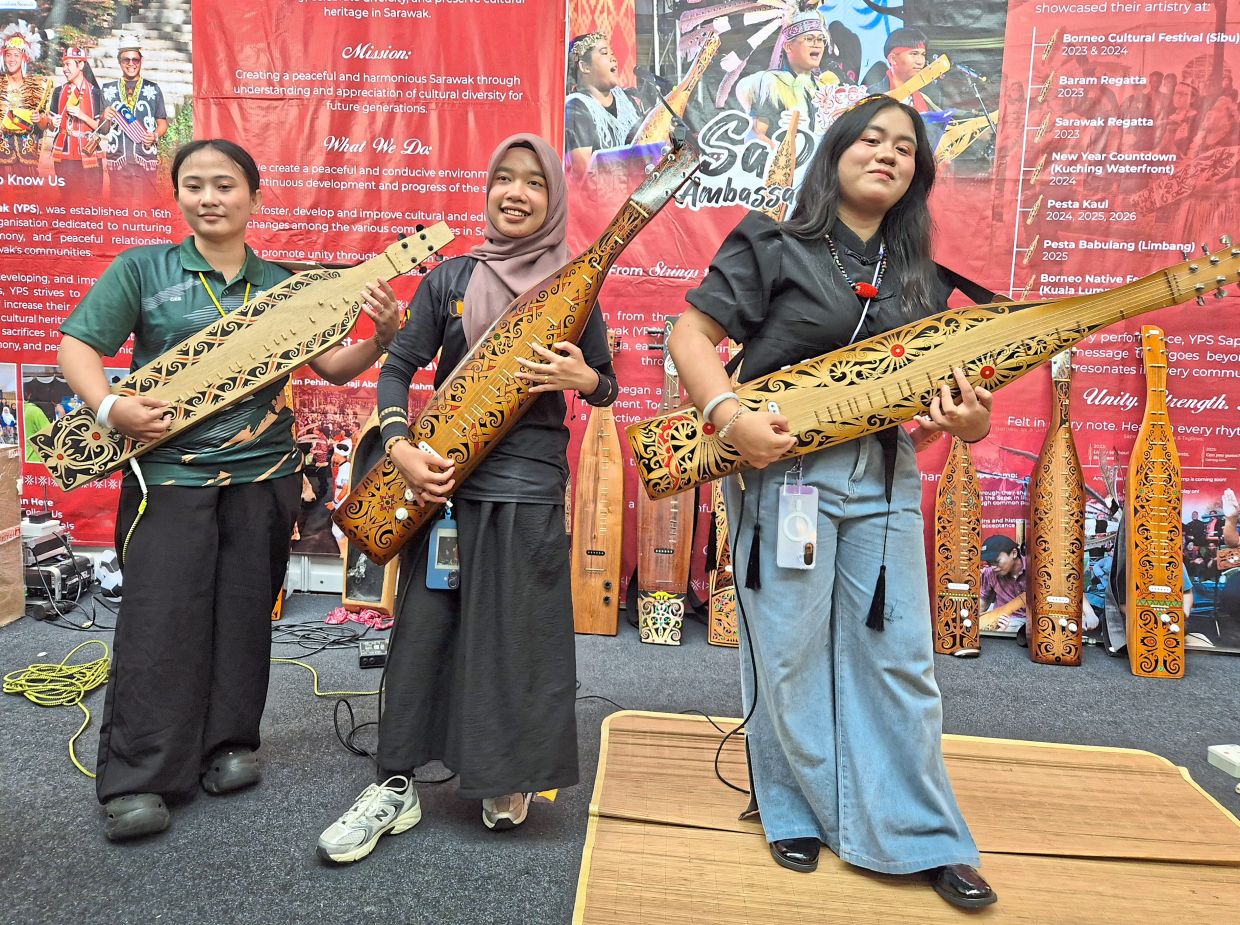
From left: Gloria, Qaseh Ilyani Batrisya Muhamad and Annette Ixora Shea Anak Saptemba are among a growing number of women embracing the sape. Photo: The Star/Sheela Chandran
Visitors got a chance to experience the soothing sounds of the sape up close during the interactive sessions at the Borneo Native Festival. Photos: Yayasan Perpaduan Sarawak
More women are embracing the sape, a positive sign for the preservation of the traditional instrument.
Photo: Yayasan Perpaduan Sarawak
Alena performing the sape during the 47th ASEAN Summit and Related Summits opening ceremony in Kuala Lumpur last year. The Star/Azman Ghani