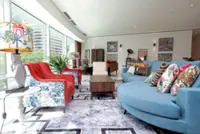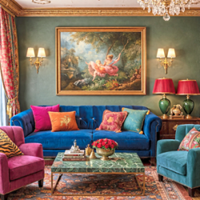
Maximalism is not about filling space but about making space matter.
In a design landscape long dominated by safe neutrals, clean lines and restrained minimalism, a quiet revolution has been building – one filled with saturated colours, layered textures, bold patterns and deeply personal stories.
Maximalism, once dismissed as “too much”, is increasingly finding its place in Malaysian homes, as designers, artists and homeowners reclaim interiors as sites of identity, memory and cultural expression.
Far from clutter or chaos, contemporary maximalism is intentional and curated. It is about confidence, choosing joy over restraint, personality over perfection.
For designers like Nabila Nasir, founder of Merite Design Studio, artist Shani ‘Manje’ Ahmed, and architect Katrine Cheong of CK Yin Architect, maximalism is not about filling space, but about making space matter.
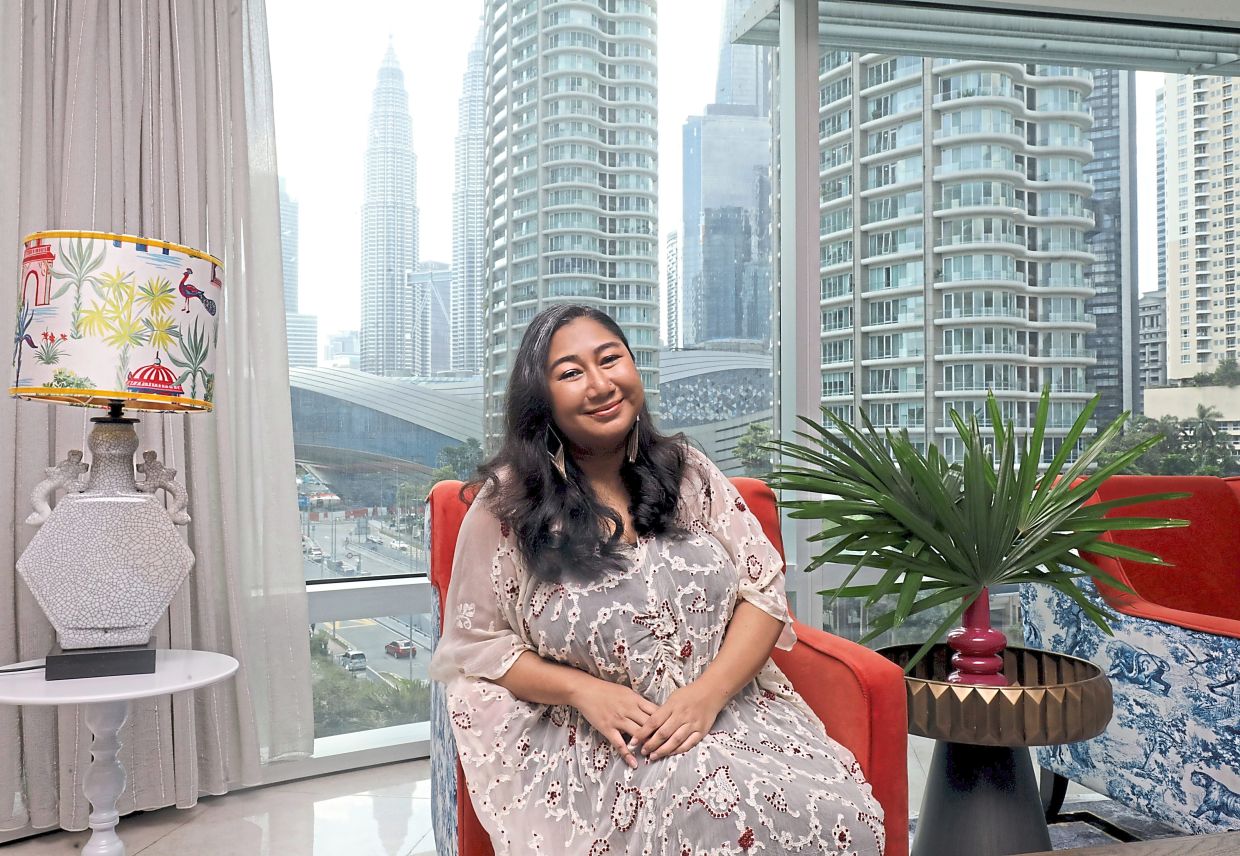 For Nabila, maximalism does not mean buying more but seeing the potential in what you already have.
For Nabila, maximalism begins with authenticity. After spending more than a decade abroad in cities where expressive interiors were the norm, she returned to Kuala Lumpur with a 353sq m home to furnish – and a growing sense of frustration.
“I couldn’t find anything locally that reflected how I wanted to express myself,” she says.
“I dress boldly, love colour and patterns, but when it came to furniture, everything felt muted, safe and beige.”
Rather than import pieces from overseas, Nabila took matters into her own hands. She began designing and refurbishing furniture for her own home, sourcing discarded pieces from secondhand stores and even recycling bins, re-imagining them through vibrant fabrics and unexpected, juxtaposed patterns.
What started as a personal project soon grew into her design studio, which is known for its fearless aesthetic and storytelling-driven approach.
To Nabila, maximalism is simply about being loud with what you love.
“If you'd like a huge print-on-print sofa, place it there. If you'd also love a contemporary chandelier, then put that there too,” she says.
“It’s showing all your likes and personality in one space without conforming to preset ideas.”
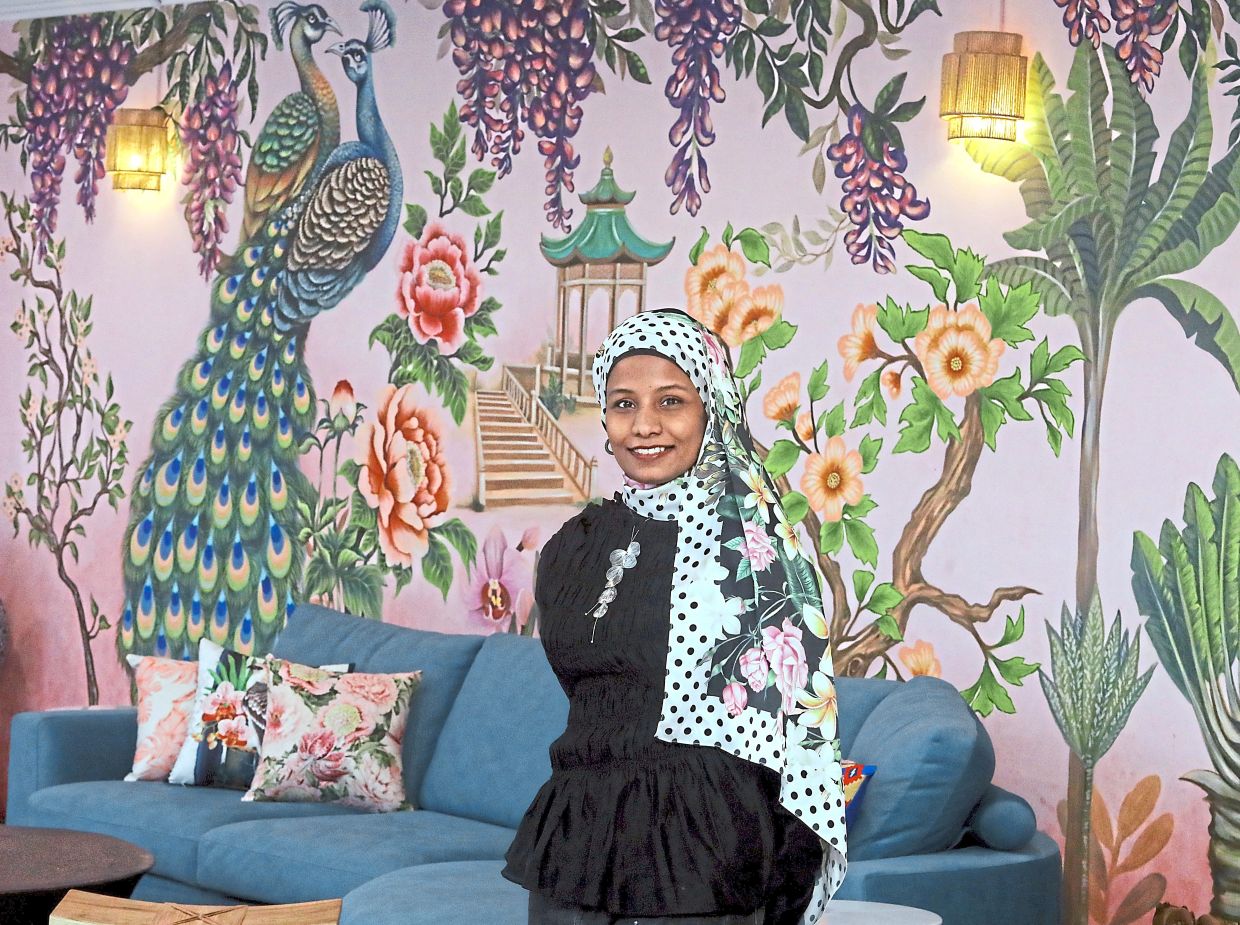 People think maximalism is hoarding, but it’s not – it’s about composition, balance and storytelling, says Shani.
One of the most common misconceptions about maximalism is that it is unstructured or excessive.
But the opposite is true: Maximalism demands discipline.
“People think maximalism is hoarding,” says Shani, whose intricate handpainted murals and furniture designs are central to Merite’s visual language. “But it’s a style. It’s about composition, balance and storytelling.”
Shani’s work blends tropical flora and fauna, cultural motifs, historical references and symbolic narratives into richly layered artworks that feel immersive rather than overwhelming.
Whether painting a mural inspired by chinoiserie or illustrating furniture featuring guardian animals, her process is deeply research-driven.
“If I’m doing local-themed art, I study textiles, architecture, carvings and traditional motifs,” she explains. “Then I reinterpret them in a way that feels contemporary and whimsical, not something generic you’d find online.”
This attention to placement and proportion is what keeps maximalist spaces from feeling chaotic.
Nabila agrees: “It’s alright to clash patterns and colours, but they have to be bold enough to hold their own. Narrow stripes with busy prints won’t work. It has to be confidently intentional and well-placed.”
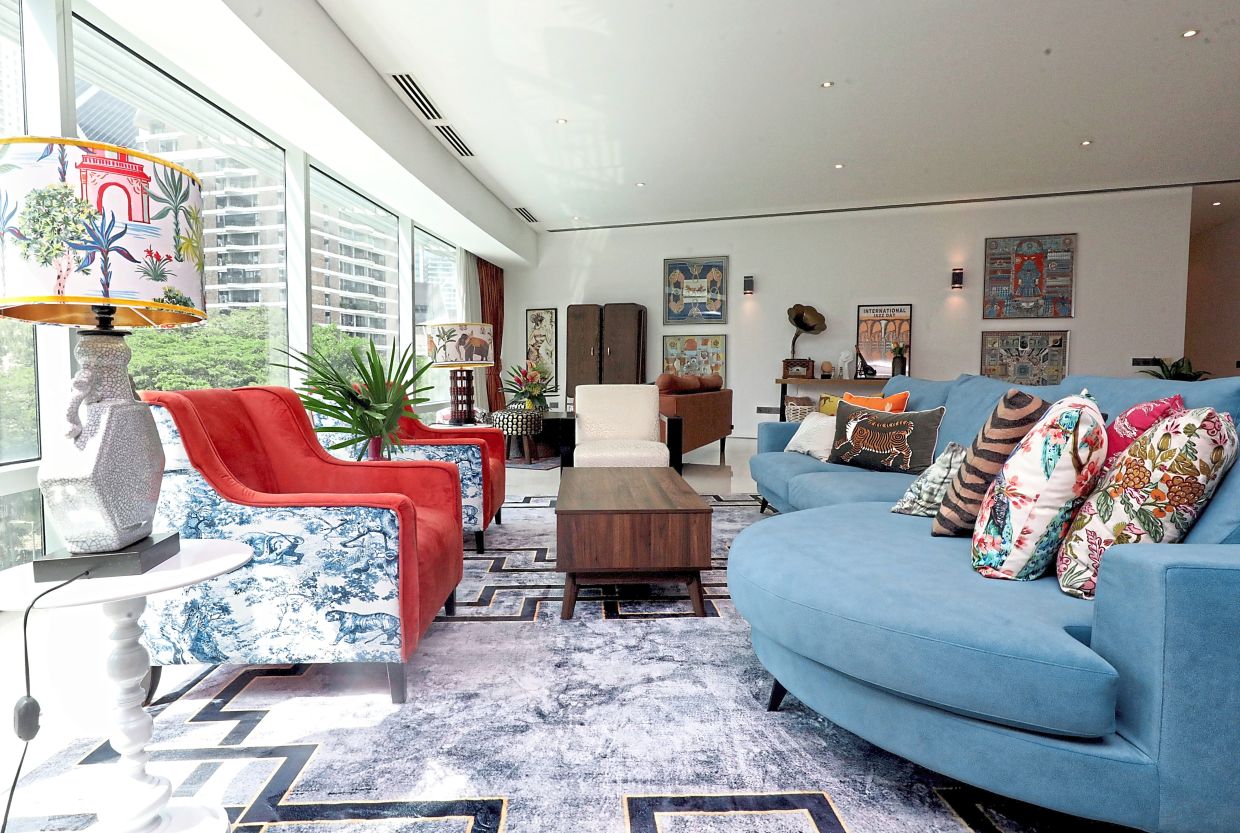
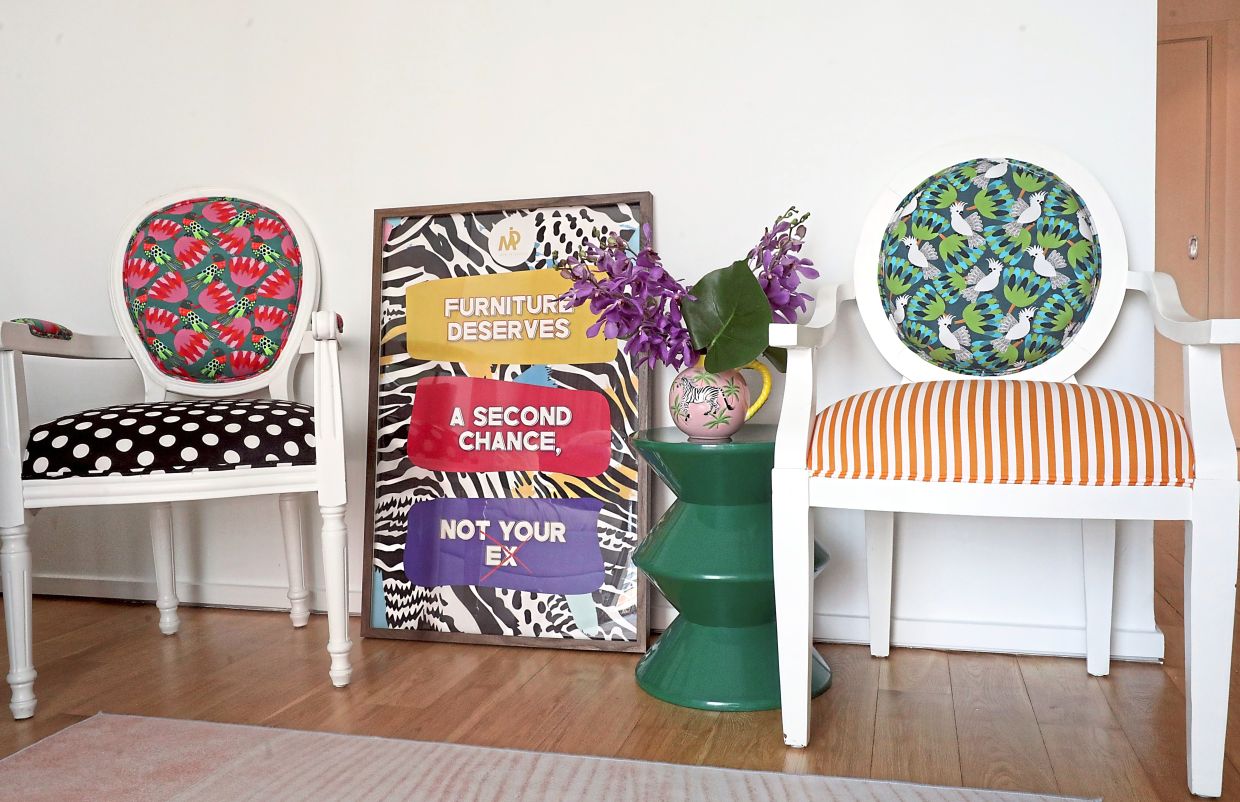 Many of Nabila's statement pieces, such as these chairs, were re-purposed from discarded furniture frames, stripped to their skeletons.
Sustainability is another cornerstone of maximalism, says Nabila.
Many of her statement pieces began their lives as unwanted furniture – old sofas, worn stools, frames stripped to their skeletons.
One of her favourite projects involved rescuing a sofa frame from her condominium’s recycling area.
“There was nothing on it – no upholstery, no legs – but I could see its potential,” she recalls.
“Most people stop looking when something looks broken. But that’s where I start.”
Each refurbished piece is carefully rebuilt – foam replaced, fabric re-imagined, structure reinforced – while preserving the soul of the original.
“It’s like giving it a new life, but keeping its skeleton,” she says.
For Nabila, maximalism does not mean buying more, it’s sustainable and eco-friendly.
“It means seeing more potential in what you already have,” she says.
“Don’t throw out that old chair. Re-imagine it.”
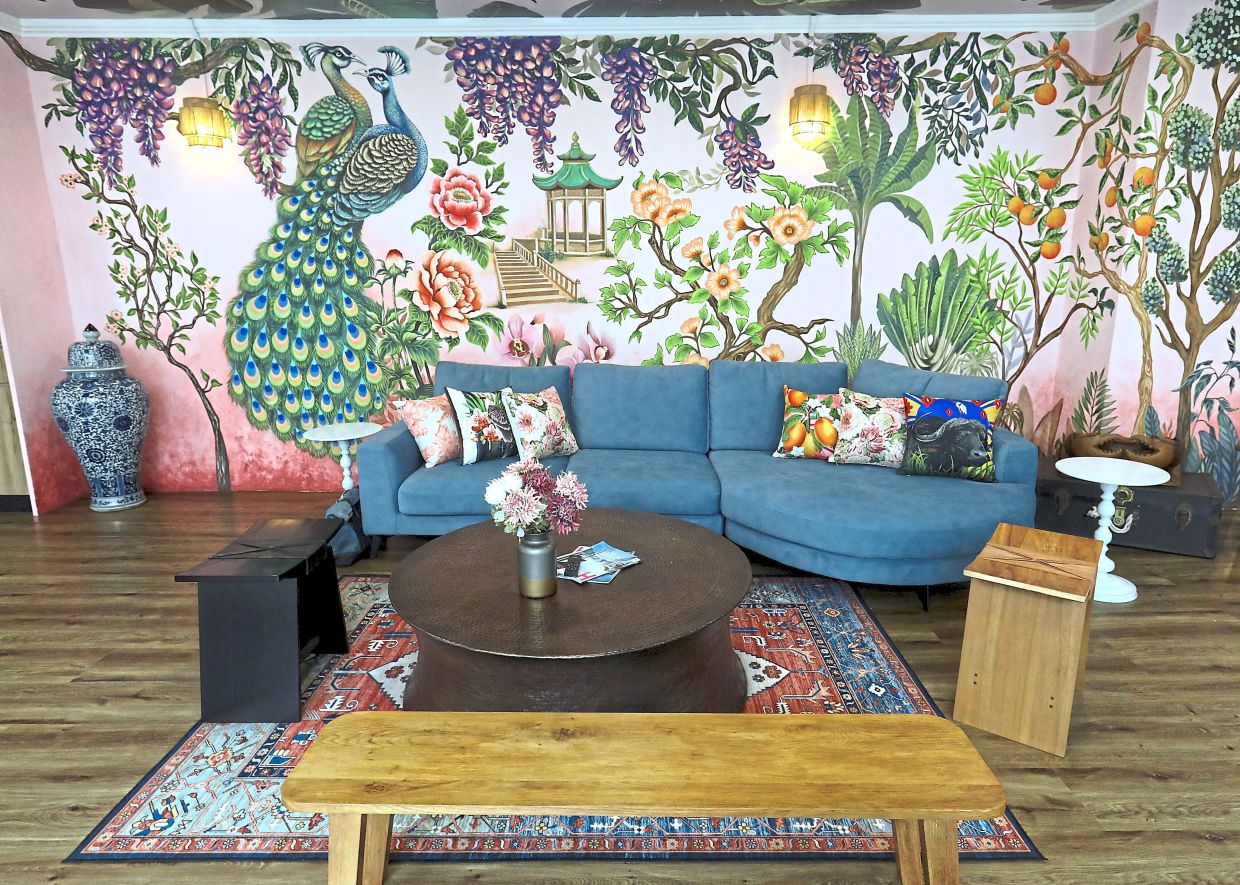
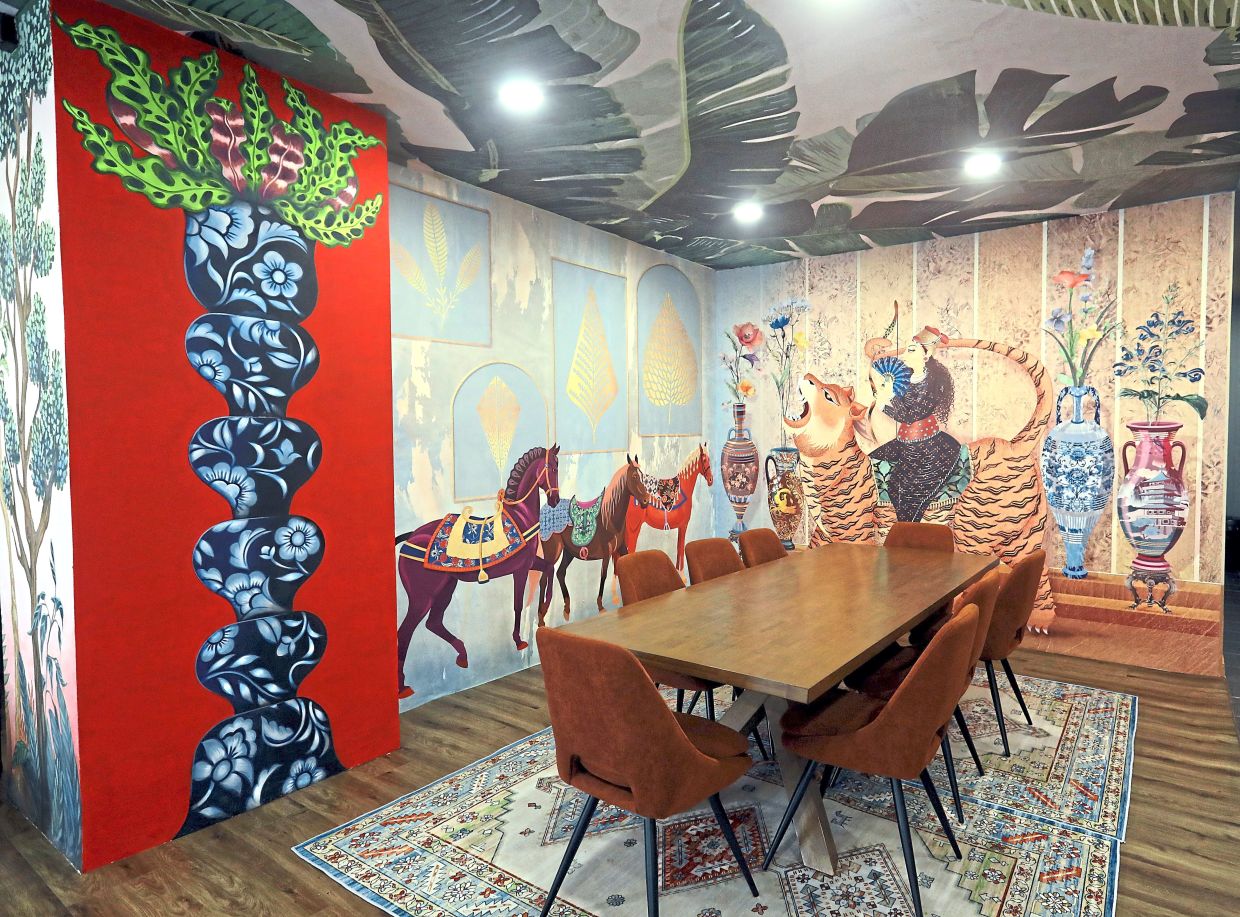 Maximalism can have many elements without looking crowded, says Shani.
If Merite’s furniture forms the foundation of a maximalist space, Shani’s art gives it narrative depth.
One of her most striking works depicts a woman riding a tiger – an image inspired by Nur Jahan, the powerful Mughal empress whose influence extended far beyond conventional depictions of femininity.
“I wanted to show her as a warrior,” Shani says. “She’s wearing an emperor’s headgear, carrying a bow and arrow, riding a ferocious tiger. It’s about power, leadership and redefining how women are portrayed.”
The tiger itself holds layered meaning. It is a symbol of land, strength and guardianship, as well as a critically endangered Malaysian animal.
In Shani’s hands, art becomes a way to honour history, culture and conservation without sacrificing visual impact.
Her chinoiserie-inspired murals similarly reinterpret a European decorative style through a tropical, Malaysian lens.
Blue-and-white porcelain motifs sit alongside orchids, palm leaves and peacock ferns. Pagodas coexist with rainforest flora.
The result is a hybrid aesthetic – lush, detailed and distinctly regional.
“Maximalism can have many elements without looking crowded,” Shani says. “When everything comes together with intention, it tells a story.”
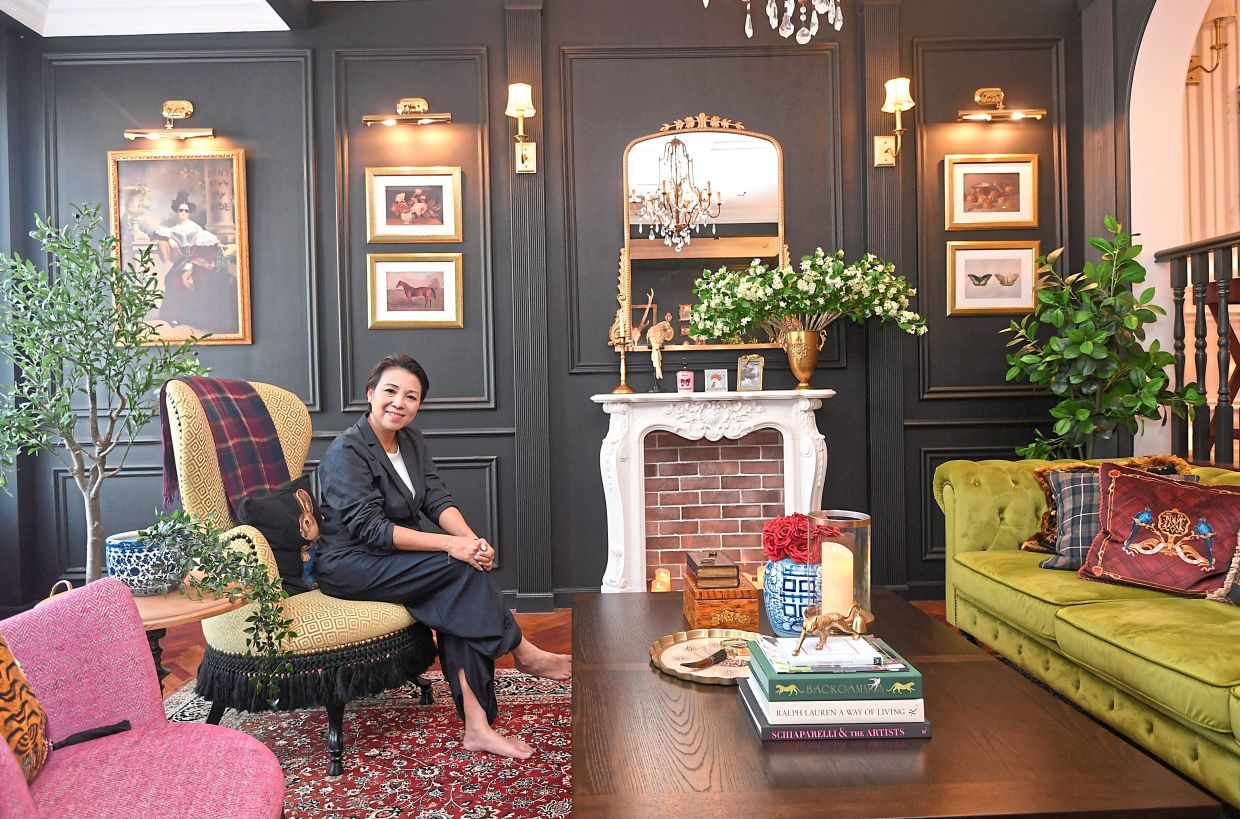 For Cheong, maximalist design means setting a strong colour palette, defining feature walls, then layering characterful furniture and decor.
For architect Cheong, maximalism is both a challenge and an opportunity.
Raised in a modest, partitioned shoplot with no living or dining space, her childhood shaped her belief in the emotional power of well-designed interiors.
“That experience made me appreciate how space affects how we live and feel. From young, I dreamed of having a proper home – cosy, thoughtful, well designed,” she says.
When Cheong was approached by a Bangsar client to design a maximalist home, she embraced the complexity of the brief.
“Maximalist design is not something many designers are trained to do,” she admits. “It relies heavily on the designer’s ability to balance colour, texture and detail.”
Her approach begins with control – setting a strong colour palette, defining feature walls, and then layering characterful furniture and decor.
“Control and balance are everything,” she says. “It’s easy to start, but you must also know when to stop.”
Cheong’s work also often incorporates chinoiserie elements – ornate wallpapers, lacquered finishes, florals and birds – balanced against Western architectural frameworks.
Built-in cabinetry might follow English classical proportions, while loose furniture and decor lean Oriental.
Yet these elements don’t clash, but rather complement. And the result is a space that feels rich, elegant and cohesive.
Beyond visual appeal, maximalist interiors can be deeply sensory. And Cheong believes good design should engage all five senses.
“Visually, maximalism is bold and expressive,” she says.
“But touch is equally important. I always insist on natural wood and stone – the temperature, texture and even scent of these materials create comfort and calm.”
For homeowners, living in a richly decorated space can be uplifting.
“Every piece has a story,” she says. “When the home reflects who you are, it creates pride and happiness.”
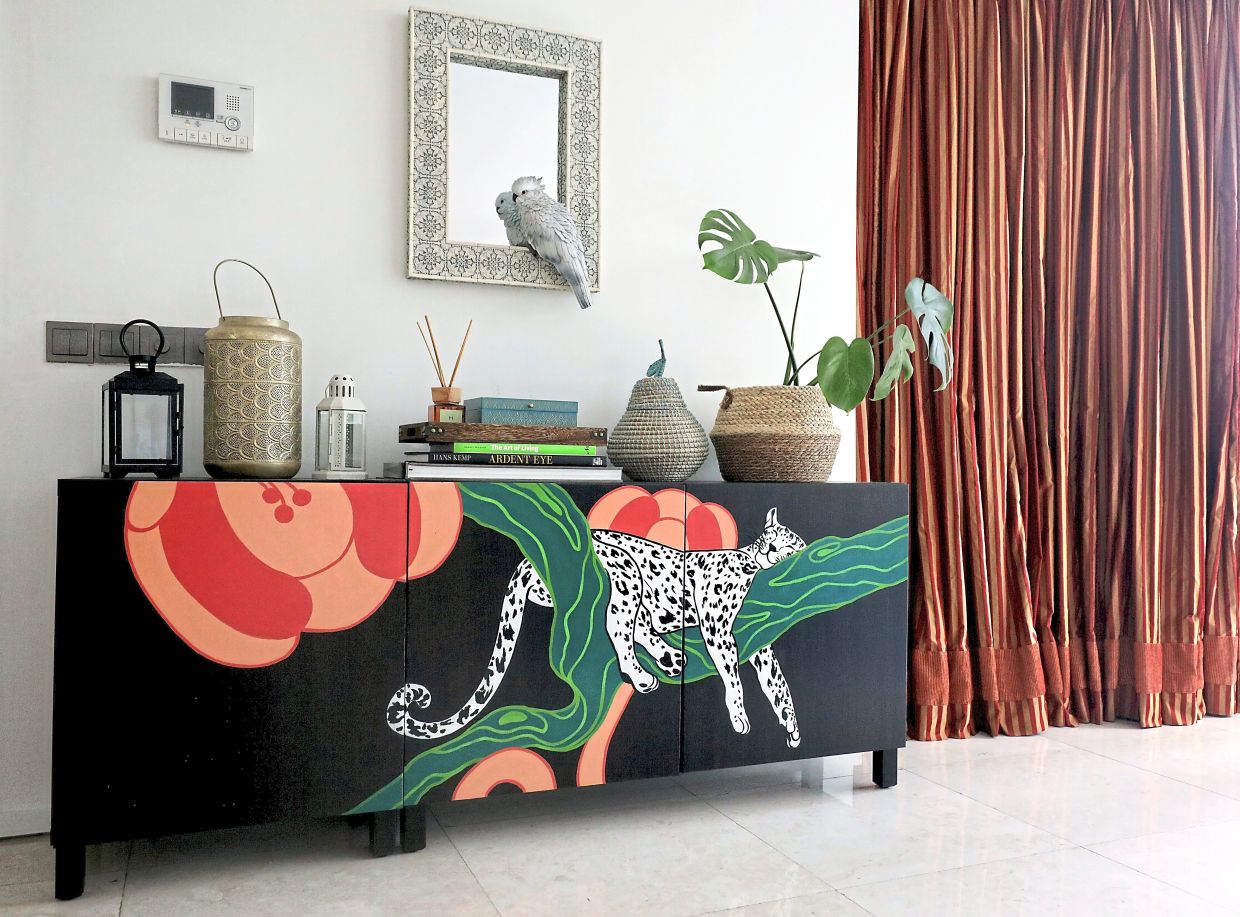 Nabila says maximalism is simply about being loud with what you love.
While maximalist spaces often earn admiration as “magazine homes”, Cheong acknowledges that many Malaysians still prefer calmer, more restrained interiors for everyday living.
Styles like minimalism and Japandi remain popular for their sense of order and tranquillity.
Yet designers do see a shift happening – slowly but surely.
“Malaysian culture is already vibrant,” says Nabila. “Look at our food, our textiles, our festivals. Why are our homes so afraid of colour?”
Her advice for those curious but cautious is simple: start small. A cushion. An artwork. A bold chair.
“Once you see how one piece changes the energy of a room, it becomes easier to take the next step,” she says.
Ultimately, maximalism is not about following a trend, it is about permission – the permission to be expressive, sentimental, imperfect and joyful in the spaces we inhabit.
“A beautiful home,” Nabila reflects, “is one that captures what’s quintessentially you. Not perfection. Not trends. Just you.”
And perhaps that is the real appeal of maximalism today.
In a world that often asks us to tone it down, maximalism invites us to live – and design – without apology.
When more is more

Maximalism is not about filling space but about making space matter.
Far from clutter or chaos, contemporary maximalism is intentional and curated.
Many of Nabila's statement pieces, such as these chairs, were re-purposed from discarded furniture frames, stripped to their skeletons.
Nabila says maximalism is simply about being loud with what you love.
Maximalism can have many elements without looking crowded, says Shani.
An attention to placement and proportion is what keeps maximalist spaces from feeling chaotic.
For Nabila, maximalism does not mean buying more but seeing the potential in what you already have.
People think maximalism is hoarding, but it’s not – it’s about composition, balance and storytelling, says Shani.
For Cheong, maximalist design means setting a strong colour palette, defining feature walls, then layering characterful furniture and decor.