A higher standard of living and a robust dining ecosystem have contributed to Malaysians' growing appetite for beef. – OLIVIA LEE
At restaurants across Kuala Lumpur’s increasingly cosmopolitan dining scene, you’ll notice one familiar recurrence. Beef – in some form or another – is often a staple on the menu.
This inclusion isn’t by accident. It is entirely bolstered by changing eating patterns, marked by a steep growth in beef consumption among Malaysians.
Consider this: according to data collated by Meat & Livestock Australia, Malaysians are now the biggest consumers of beef in South-East Asia, eating approximately 9.5kg of beef per person in a single year. This works out to nearly 200g of beef every week – essentially a steak a week.
Data from Trade Data Monitor also shows a steady ascent in the amount of beef and buffalo meat imports into Malaysia in the past 10 years, rising from 140,000 tonnes in 2014 to over 200,000 tonnes in 2024.
So what is propelling this growing appetite for red meat?
Growth drivers
While poultry continues to dominate the meat market, with Malaysians consuming over 50kg a year of fowl – beef has been slowly but stealthily climbing up the rungs of meat consumption nationally.
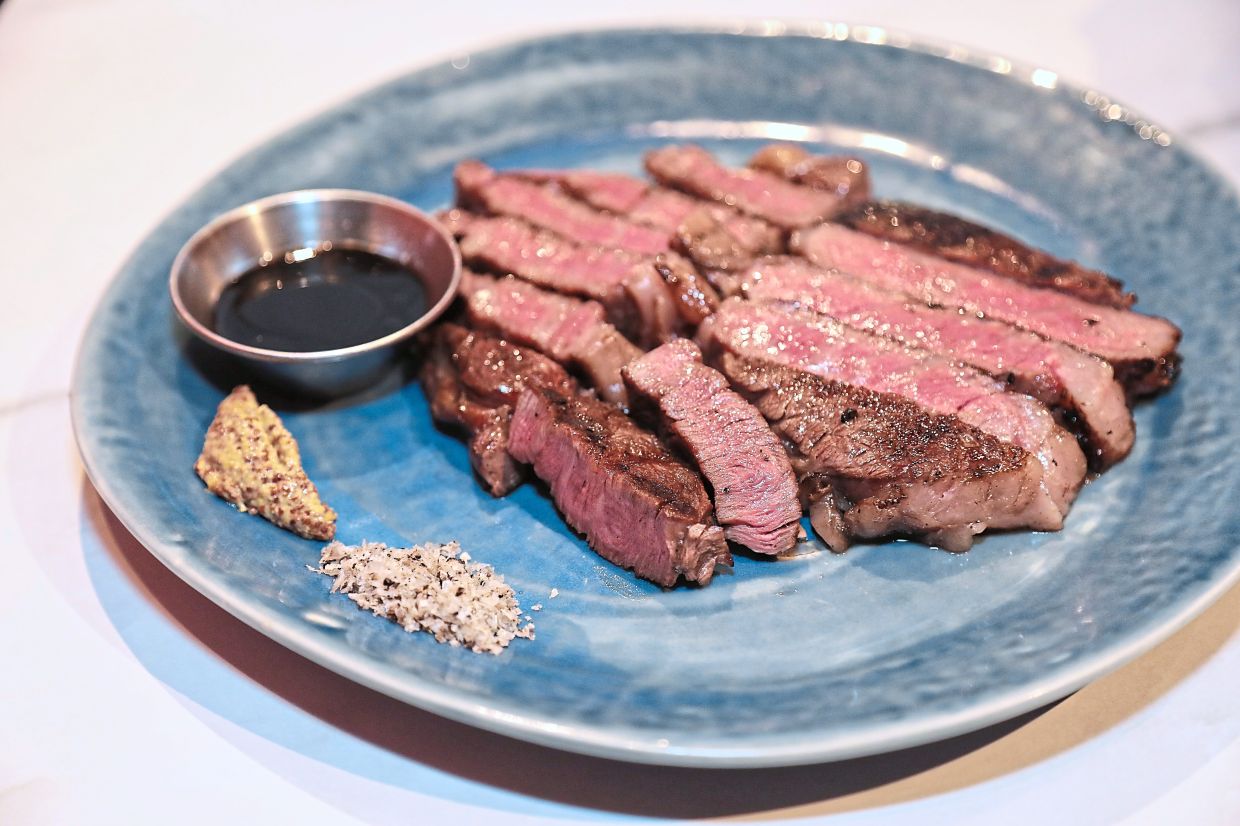 Malaysians now eat the equivalent of a steak a week. — Filepic
The inclusion of beef in local diets marks a dramatic shift in terms of Malaysian eating patterns, which mirrors what is happening in the rest of Asia. Countries like China, South Korea and Japan were once largely hinged on diets rich in fruits and vegetables, but this has since given way to more carnivorous inclinations, buoyed by globalisation and Western influence, both of which have slowly usurped traditional diets.
Unsurprisingly, in the next 10 years, Asia is predicted to have the biggest growth in terms of beef consumption across all global regions.
In Malaysia too, local diets were once made up predominantly of rice, vegetables and seafood, with meat mostly eaten during festivals and special occasions. In 1960, for example, Malaysians ate 1.56kg of beef per person per year. By 2013, it had gone up to 6.5kg per capita. Meanwhile, the amount of beef consumed domestically in metric tonnes increased 100% between 1960 and 2006.
This increase is tied to a larger population base as well as growing wealth and prosperity in urban centres, which has led to higher beef consumption and a blossoming interest in adding beef to household budgets and recipes.
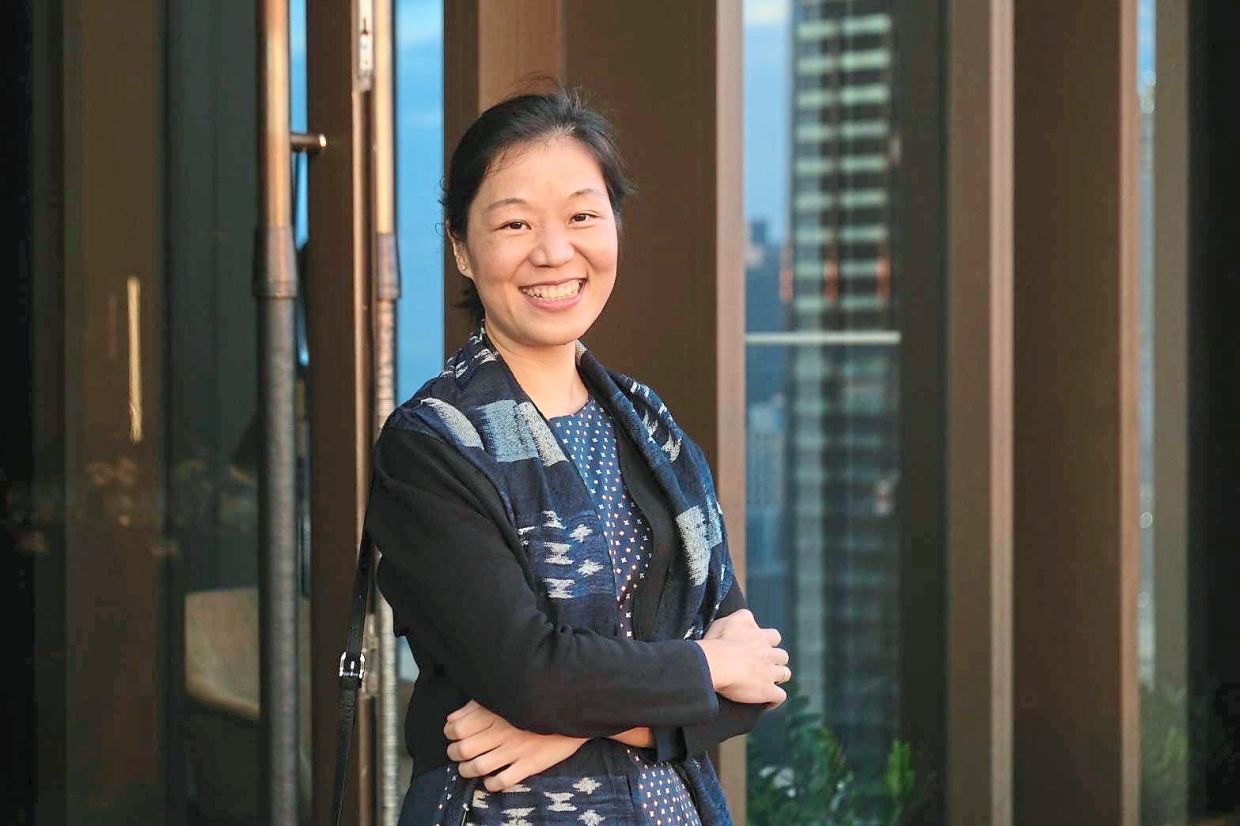 Valeska says that she has noticed a growing demand for secondary cuts like topside and brisket among Malaysian consumers looking for better-value red meat. — Meat & Livestock Australia
“I think particularly after the Covid-19 pandemic, you find that people spend the time and are more open to doing fancier recipes at home and trialling different cuts of beef. So the retailers are also starting to see that and they are also expanding their range as well,” says Valeska V, Meat & Livestock Australia’s regional manager for South-East Asia. Meat & Livestock Australia is an independent company which regulates standards for meat and livestock management in Australia and international markets.
Malaysians are also becoming more well-travelled, which in turn means more exposure to countries where beef is central to the local diet. Enjoyment of these diets then leads to a hunger and demand for replication once they are back in their homeland.
Alongside this is the growth of the restaurant industry in Malaysia, which has burgeoned especially in capital cities like Kuala Lumpur and Penang, where steakhouses and barbecue joints are now increasingly popular.
“I think yes, if you notice – a lot of steakhouses and restaurants that focus on open-fire cooking and grilling are opening and I guess a lot of consumers are willing to pay a premium for this kind of food, so these kinds of places are still popping up.
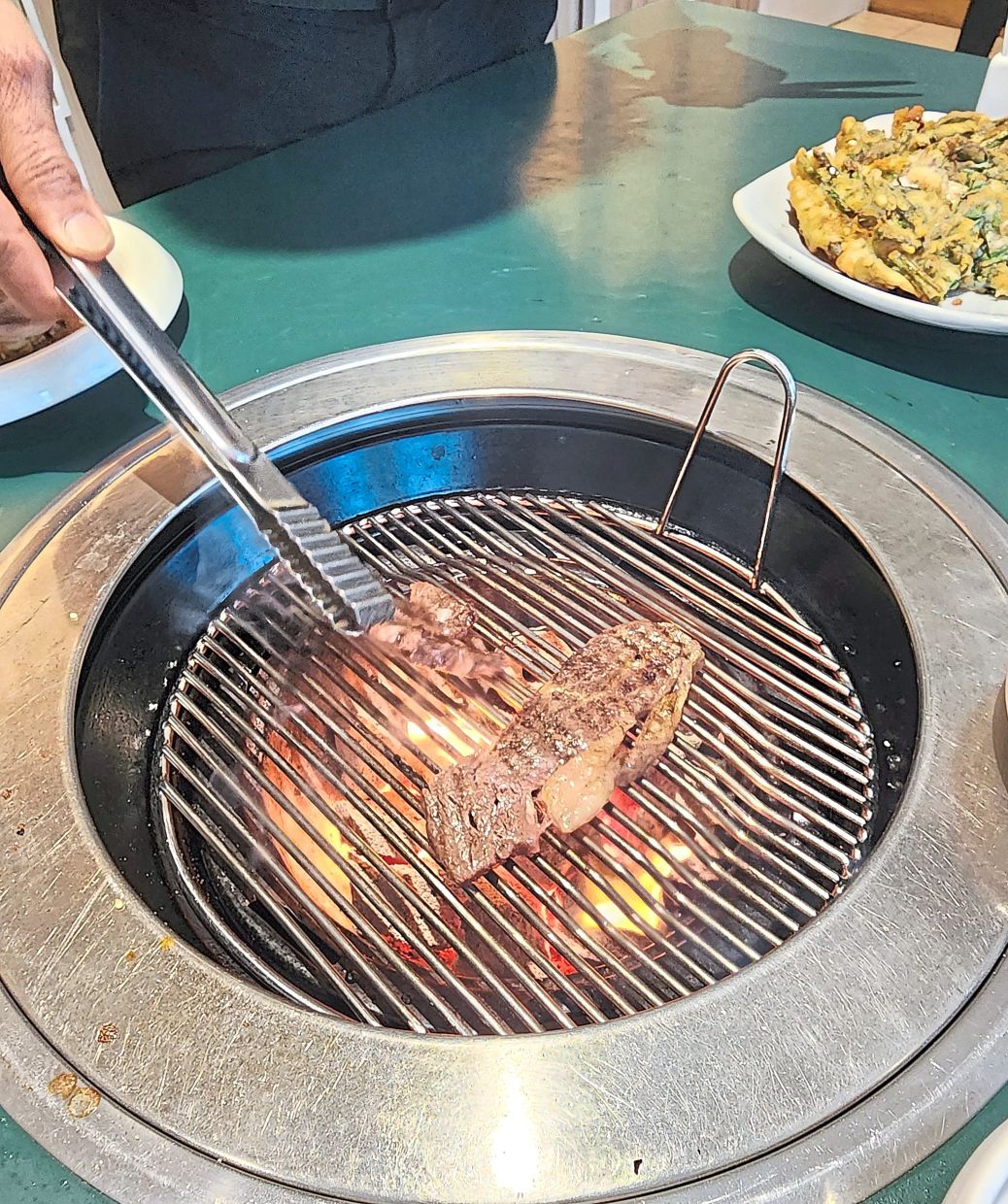 A growing number of Korean barbecue and Chinese hotpot restaurants in city centres like KL and Penang are partially responsible for driving beef consumption. Photo: Filepic
“Personally, I also think people are cutting down on cheaper foods and spending more on premium items like steaks because their quality of life has gone up and their taste buds are maturing a little. Steak is also a big-ticket item for special occasions like birthdays. We get like 30 birthday events a week at our restaurants,” says Nicholas Thang, the chef-owner of beef-focused eateries The Honest Butcher and Restaurant Chu. Thang is also a meat supplier who supplies beef to some of KL’s top restaurants.
Another restaurant trend that is lending heft to the burgeoning appetite for beef is the expansion of Korean barbecue and Chinese Muslim hotpot eateries, which have become particularly ubiquitous in Malaysia over the past few years.
These dining formats allow for groups of people to gather together and eat red meat, whether that’s stirred into a hotpot broth or grilled over coals. Chinese hotpot especially has become particularly popular in KL, with many outlets now focused on halal variants.
“It’s driving the red meat consumption as well. These days, when hotpot restaurants open – whether it’s a cheaper option or a more high-brow one – you find that red meat is a staple part of these hotpot occasions where people share a meal together,” says Valeska.
According to Valeska, it is the thriving restaurant industry in Malaysia that is now largely driving the demand and appetite for premium beef nationwide.

“Food service (restaurants, catering, hotel restaurants and banquets) is probably driving about 60% of the whole segment, I’d say, and is providing that trend driver. So the chefs will create a recipe or a dish and that has a trickle-down effect to diners and consumers at home,” she says.
Beef preferences
Malaysia’s beef self-sufficiency rate has fallen dramatically over the years and is currently at 11%, which means most beef consumed domestically is not derived from local cows.
Also on the local front, the word ‘beef’ is often used interchangeably to describe both beef from cattle as well as buffalo meat, which is what is predominantly found in local markets. In fact, India is the largest bovine supplier in Malaysia, accounting for 86% of beef imports, most of which are made up of Indian buffalo meat.
Australian beef, meanwhile, makes up 8% of the market, the bulk of which is composed of chilled and frozen grass-fed and grain-fed beef. The rest of the imports consist of beef from Brazil as well as a growing but niche Japanese supply chain and newer entrants like Korea’s halal-certified Hanwoo beef, which shot to popularity when it was introduced in Malaysia in 2024.
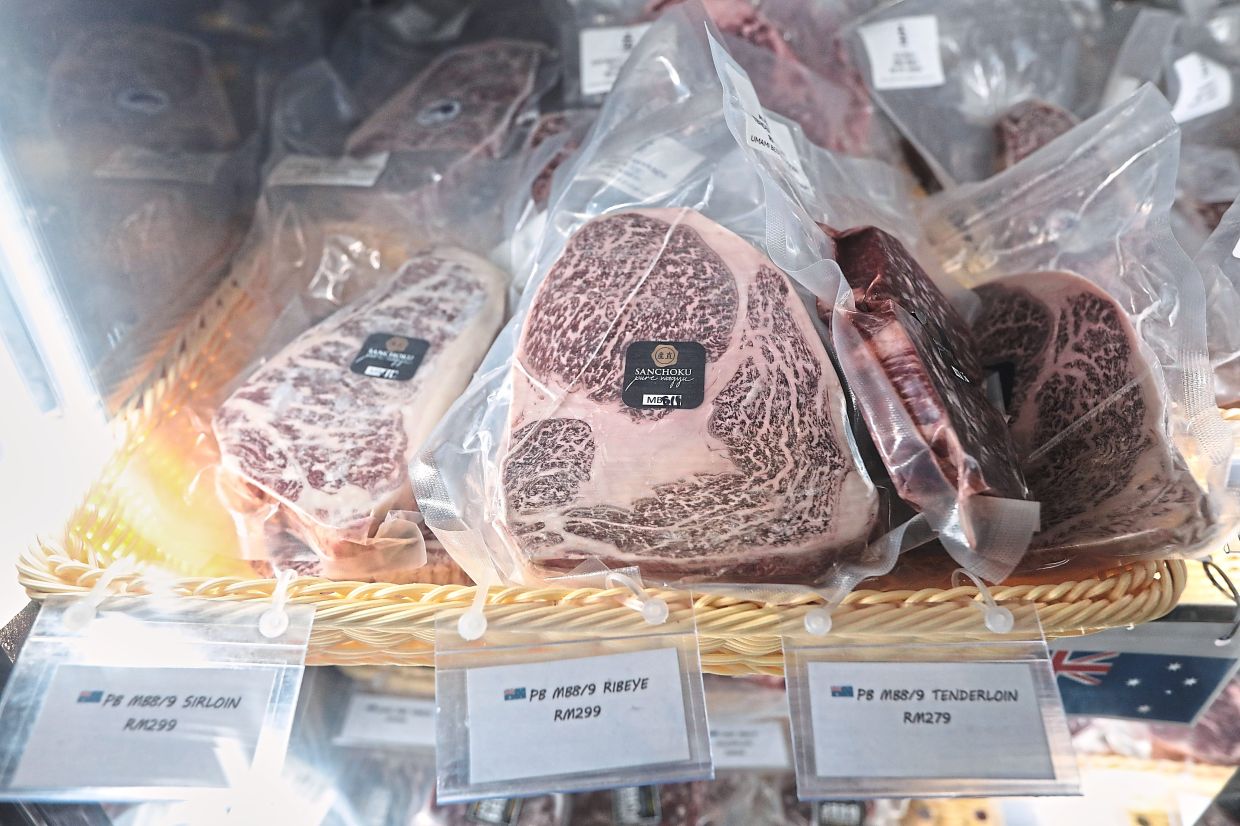 According to Thang, diners at high-end restaurants prefer to spend their money on premium cuts like sirloin and ribeye, as opposed to cheaper cuts that are more affordable. — Filepic
“People are getting very interested in Hanwoo beef. In 2024, we brought five tonnes of MigyeongSan Hanwoo (rare Korean virgin cows) to Malaysia, but the demand has been so immense that we increased it to eight tonnes in 2025. It’s still not enough to cater to demand, but I want to bring in the best quality Hanwoo beef into the market, so I can’t bring in too much even though Malaysian diners want more,” says Olivia Lee, the founder of Korean produce businesses like TasteK and Plan New.
For the mass market, Valeska says there has been a growing trend of consumers opting for secondary cuts like topside, rump and beef knuckle, which account for 50% of a cow’s utilisation and can be about 30% cheaper than premium cuts of beef like sirloin, tenderloin and rib eye, which cumulatively make up less than 20% of an entire cow’s utilisation.
“That’s where the demand and growth are. I guess it is a more mass-market preference because you would find things like brisket and topside are probably more versatile for stews, curries and braising dishes and Malaysian cuisine has a lot of that. These are good cuts and better value for money – it’s just a matter of knowing how to cook them.
“So we spend a lot of time in Malaysia, where we work with food service outlets, retailers and distributors on how to better utilise these cuts so that they can actually create really marvellous dishes as well,” says Valeska.
 Lee says that Malaysians are very interested in premium Korean beef like Hanwoo and she has had to increase supply based on the soaring demand. – OLIVIA LEE
In terms of demand in higher-end restaurants, Thang says the philosophy is the exact opposite of mass market demands. Based on his observations and conversations with suppliers and slaughterhouses, the demand in high-end restaurants is for premium cuts.
“For expensive steaks, ribeye, sirloin and tenderloin sell the most. Somehow Malaysians like to eat the most expensive ones and the more marbled meat as well. For Australian beef, for instance, Malaysians prefer the higher-grade marbling, like a marbling of six, seven or eight (more intense marbling), which has the softest texture. Malaysians don’t mind paying for that because ultimately they seem to prefer premium beef that requires little chewing,” says Thang.
His view is echoed by Lee, who says, “Normally, for Hanwoo beef, people want it as a steak, that’s why we focus on bringing in tenderloin and strip loin cuts. Because it’s pricy and high-quality, people prefer to cook it over a barbecue or grill and they want a premium cut,” she says.
Despite the soaring demand for beef in Malaysia, it is important to note that, like most red meats, beef should be consumed in moderation. Although it is high in protein, vitamin B12, zinc and iron, the general recommendation is to have no more than two servings a week, as observational studies have linked excess consumption with increased risks of heart disease.
 Meat consumption in Malaysia is projected to grow in the coming years, with a 5% increase expected this year. — NADIN SH/Pexels
So will the demand and appetite for beef consumption continue to grow in Malaysia? Oh, most definitely. In fact, all the data points in that direction.
“Meat consumption will definitely grow in Malaysia. We project that next year, the demand will increase 5% in Malaysia and about 7% to 8% in the region,” says Valeska.