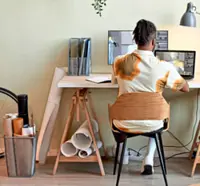
How often have you admired a man or a woman’s tush?
It can be round, firm, tight, curvy, perky, well-defined – but no matter the aesthetics, strong gluteal muscles, i.e. buttock muscles, are essential for movement, posture and joint stability.
Commonly called the glutes, they consist of three main muscles: gluteus maximus, gluteus medius and gluteus minimus.
Of the three and like its name, the gluteus maximus is the largest and most powerful skeletal muscle in the body.
It is responsible for hip extension, which is crucial for running, jumping, climbing stairs and maintaining an upright posture.
It provides the propulsive force needed for many daily activities and athletic feats; no other muscle generates as much total force in a single contraction.
The gluteus medius and minimus stabilise the pelvis, assist with hip rotation and prevent the legs from collapsing inward during movements such as squats.
This in turn protects the knees and supports balance.
When you sit too long
Long periods of sitting are not only bad for your body, but can also weaken your glutes.
This could lead to a condition called dead butt syndrome, where this group of muscles “forget” their function, leading to numbness, soreness, and potential hip or lower back problems.
ALSO READ: If you sit for hours daily, your butt could be 'dead'
Sitting places the glutes in a lengthened, inactive state that pushes the pelvis forward and puts the lower back at a painfully compressed, mechanical disadvantage.
This causes the lower back to feel tight, stiff and unstable.
When the glutes are dormant, weak or underactive, other muscles take over in ways they aren’t meant to.
This often leads to your body being shifted out of alignment, causing discomfort, dysfunction, and even injury.
It alters how you move and may lead to achy knees and ankles, despite you not having exercised those body parts.
Also, you’ll probably find it difficult to get out of a chair without using your arms for support.
Or you’ll find yourself leaning slightly forward while climbing stairs.
That’s why you need to strengthen your glutes, not only to keep it beautiful, but also to maintain its functionality.
Test those glutes
Many fitness buffs are often unaware that despite working out regularly, their glutes can remain underactivated, thus leading to lower back and knee pain.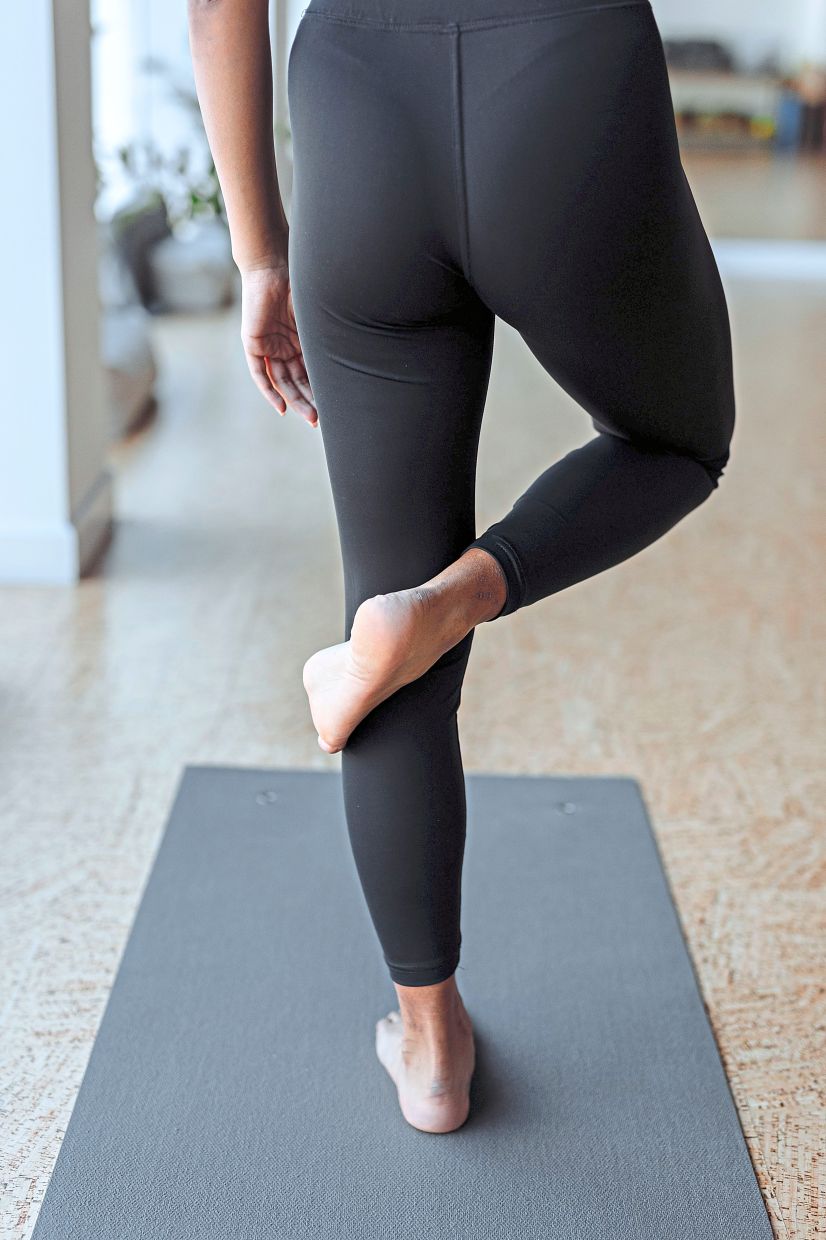
Here are some signs of poor glute activation:
- During squats, lunges or bridges, you notice your lower back arching, your hamstrings cramping or your quadriceps (thigh muscles) working doubly hard
- Chronic tightness in the hip flexors or hamstrings
- You’re struggling to maintain balance during single-leg movements or simply standing on one leg
- Your knees cave inward when you perform squats and lunges
- A swaying walking pattern where the hip on the stance side dips is a classic sign of gluteus medius weakness.
You can also try these simple tests to check for weak glutes:
Stand in front of a mirror, lift one leg off the floor and observe the pelvis.
If the hip on the non-standing side drops visibly lower than the standing side, it indicates weakness of the gluteus medius on the standing leg.
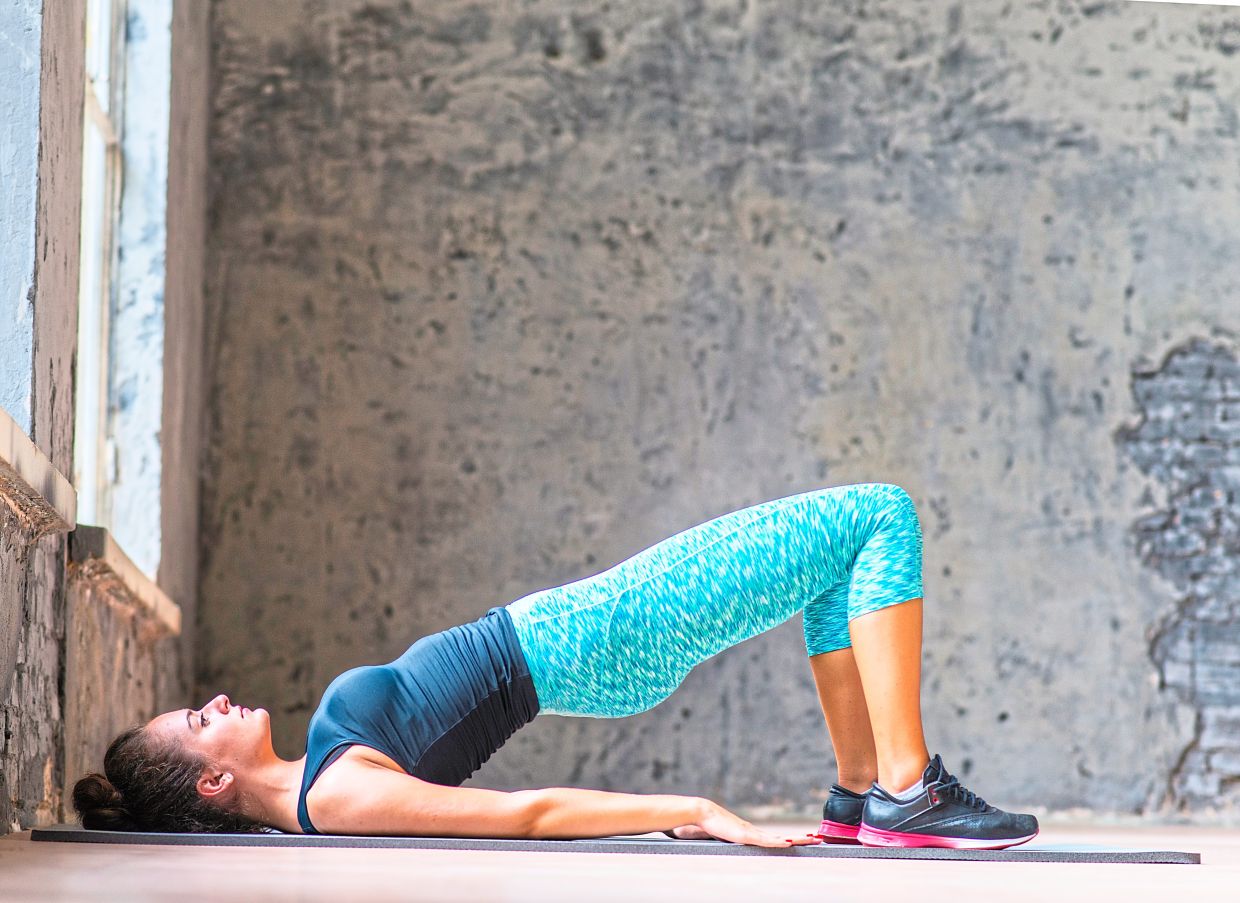
Lie on your back with your knees bent at 45°, feet flat hip-width apart and arms relaxed by your sides.
Lift your hips off the floor until your knees form a 90° angle.
If you feel a strong contraction in the buttocks, and not in the hamstrings or lower back, your glutes are engaging.
If the back arches or hamstrings start to cramp, the glutes may be underactive.
Put your hand on your glutes while doing a squat or the glute bridge.
If they feel soft while you’re performing the movement, other muscles may be compensating.
In my next column, I’ll explore some easy ways to fire up those glutes that have been on an extended vacation.
Revathi Murugappan is a certified fitness trainer who tries to battle gravity and continues to dance to express herself artistically and nourish her soul. For more information, email starhealth@thestar.com.my. The information contained in this column is for general educational purposes only. Neither The Star nor the author gives any warranty on accuracy, completeness, functionality, usefulness or other assurances as to such information. The Star and the author disclaim all responsibility for any losses, damage to property or personal injury suffered directly or indirectly from reliance on such information.