



WHEN her 91-year-old mother began forgetting family recipes and long-practised customs, Juna Tan realised she was watching more than memories fade away.
The elderly woman who had instilled Peranakan etiquette, traditions, and values in her from childhood could no longer remember them herself. Recipes once made by heart grew hazy. Cultural practices became fragmented, and worse, forgotten.
For Tan, it was a stark reminder of how fragile cultural knowledge becomes when passed down through memory, observation, and daily practice alone.
“As my mom’s dementia advanced, I realised that many of our traditions and values are not being passed on to the younger generations,” she says.
The realisation carried particular weight because Tan believes she belongs to a generation standing at a cultural crossroad.
Now in her 50s, she regards herself and her peers as perhaps the last generation to remember seeing Peranakan traditions woven naturally into daily life rather than consciously preserved as heritage.
This is something Tan hopes to change, albeit in small ways through daily practices in her home and community.
“My generation is the last generation to remember seeing our family members wearing sarongs, practising our crafts and living these values as part of daily life, not just for special occasions,” she adds.
Yet for a long time, Tan did not even realise she was carrying a fragment of a disappearing world. She simply lived it.
Growing up Peranakan
A sixth-generation Peranakan from Penang, Tan is the younger of two daughters. She was born in Kuala Lumpur but spent her childhood moving around Malaysia due to her father’s work as a plantation manager.
The family’s Peranakan identity was never formally discussed.
“My family did not talk about us being Peranakans at all,” she recalls. “I guess my parents just took it for granted.”
As a child, she assumed every Malaysian Chinese family lived much the same way. She remembers meals centred around Peranakan favourites such as curries, gulais, spicy soups and vegetables cooked with sambal.
There were rituals surrounding festive seasons, family celebrations and daily life. There were also countless pantang-larang, or taboos, that guided behaviour.
“Never go to bed without washing your feet.”
“Do not hang laundry outside after dusk.”
“Do not pluck flowers or fruits at night because the plants are sleeping.”
To outsiders, these customs may seem quaint. To Tan and her sister, they were simply part of growing up.
One phrase repeated often by her mother remains etched in her memory: Ai cho mikia, cho hoho. Mai cho ho, mang cho. ( “If you want to do something, do it well. If you are not willing to do it properly, do not do it at all,” she translates.)
The lesson, she says, applied to everything, from slicing vegetables and sewing clothes to welcoming guests and fulfilling social obligations.
“Manners and etiquette were a very big thing in my family,” she says.
Visitors were greeted respectfully and refreshments served promptly. Older family members were invited to begin meals before younger ones ate.
“We were constantly reminded that how we behaved reflected how the family brought us up,” Tan says. “And therefore the family’s reputation.”
Most of these lessons came from her mother, who had learned them from earlier generations of women in the family.
However, much of it was never formally explained. It was simply how things were done.
“I just thought that all other Malaysian Chinese families ate the same food, had the same pantang-larang and wore sarongs like mine did,” she says.
A culture shock
It was only in high school, when the family moved to a town in Johor and her classmates were predominantly Malaysian Chinese, that the differences became visible.
The things Tan had taken for granted as universal turned out to be distinctly Peranakan. The real awakening came later, after she married a fellow Malaysian Chinese from a non-Peranakan family.
“I discovered more differences in our cultural practices for weddings and social obligations, not only in our food and traditional clothing,” she says.
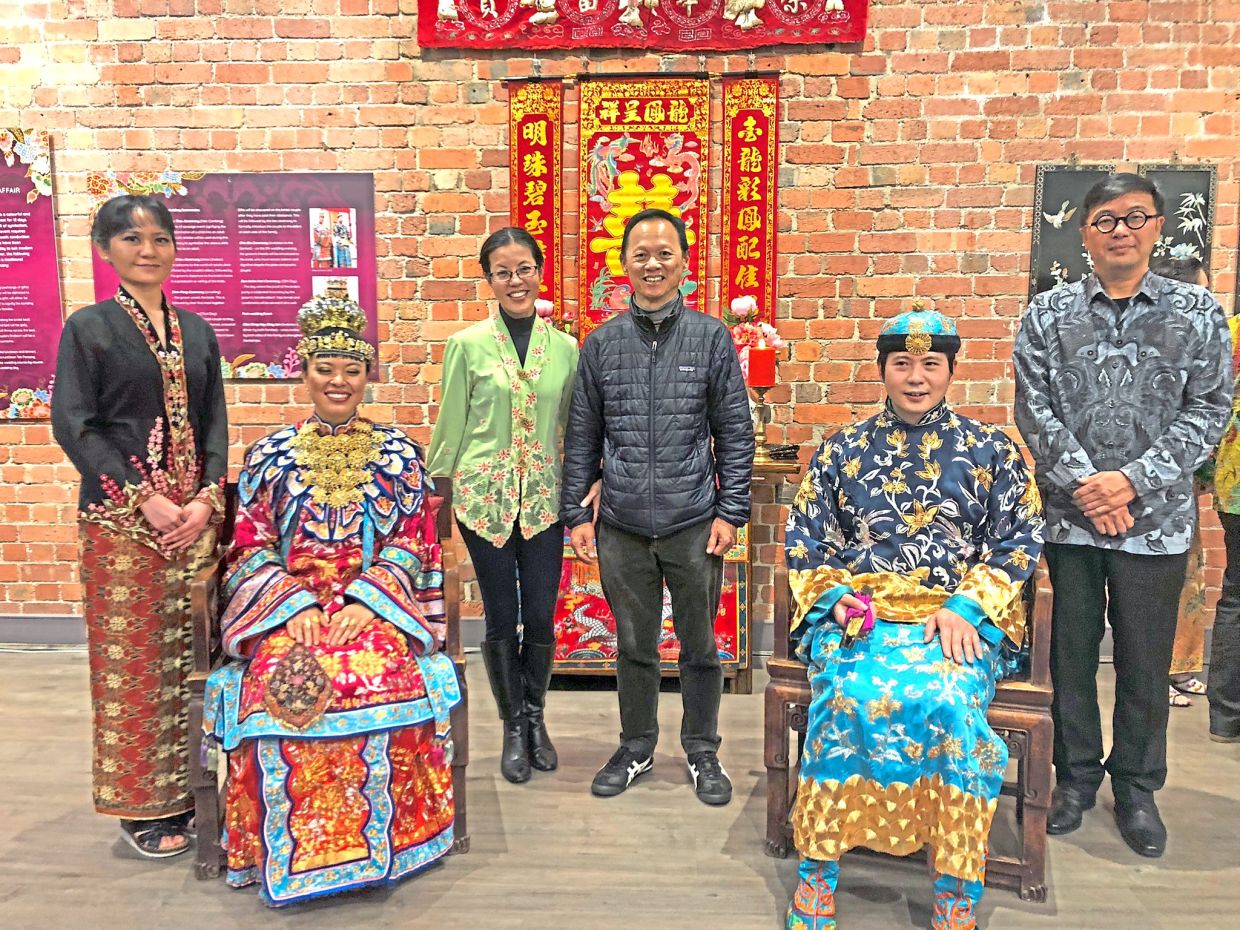
By then, Tan had already been practising Nyonya beaded embroidery for some years, a skill she had picked up from an artisan in Penang, after discovering that her great aunts – the ones who had known the craft intimately – had all passed away.
The culture shock of marriage changed how she looked at the embroidery. It was no longer simply a beautiful art form. It was, she came to understand, a representation of the values her community held dear – patience, diligence, resilience, and meticulous attention to detail.
“I realised that all the nagging and what I thought was my mom’s unnecessary nitpicking was her attempt to pass these values and our culture to my sister and me,” she says. “Just as her great-aunts and grandmother had passed them to her.”
It was then, Tan says, that her relationship with her culture began to change in a significant way.
Distance clarified home
Marriage sparked her interest in her heritage, but migration deepened it.
When Tan and her family moved to Melbourne, Australia, she found herself confronting a reality familiar to many migrants: Far from home, culture becomes a choice, not a given, and it isn’t something that can be taken for granted.
She knew that the traditions that had surrounded her growing up would no longer be part of her children’s everyday life Down Under.
Her two young sons would be raised in a different country, within a different cultural environment, and would not have the same experiences she once had.
Before moving, Tan consulted a cousin who lives in London.
“I wanted to ensure that my children do not forget their roots,” says the 52-year-old mother of two sons aged 17 and 19.
Her cousin told her that while growing up in Britain, her mother and grandmother had gone to great lengths to ensure she and her sister learned about their Peranakan heritage.
They celebrated every festive occasion and made a conscious effort to pass on cultural practices to the next generation.
The conversation left an impression on Tan and strengthened her resolve to do the same for her own children.
At around the same time, another realisation was taking shape.
Having already lost elderly relatives and facing her mother’s dementia, Tan became increasingly aware of how much knowledge had already been lost.
“There are a lot of traditions, cultural practices, crafts, recipes, knowledge and stories that were not passed on to us,” she says.
Some disappeared because families became busier and no longer had the time to practise them.
Others faded as younger generations moved away from ancestral homes or came to view traditional customs as old-fashioned and no longer relevant.
In her own family, certain embroidery techniques had vanished because no one thought to learn them.
Recipes survived only in memory. Stories that had once been shared at family gatherings were told less often.
Watching her mother fading forced her to confront this reality.
“I feel great sadness as I realise that our culture is dying,” she says.
While she believes that the hallmark of the Peranakan community is its resilience and ability to adapt, incorporating new and local influences into a culture of its own, Tan believes culture is truly alive only when its values and traditions are practised as part of everyday life.
“Being away from Malaysia reinforced these feelings,” she says.
“It meant that my kids were not immersed in or exposed to our cultural practices unless I consciously ‘make memories’ for them that link them to their roots.”
Making memories
So Tan began making memories – one meal, one festival and one family story at a time – so her sons could grow up with a connection to their roots.
She started where she felt most at home: The kitchen.
Although Peranakan dishes require more time and effort to prepare than the Chinese or Western meals her family also enjoys, she makes the time amid her busy schedule as a university lecturer.
“I make it a point to cook Peranakan dishes at least once a week,” she says.
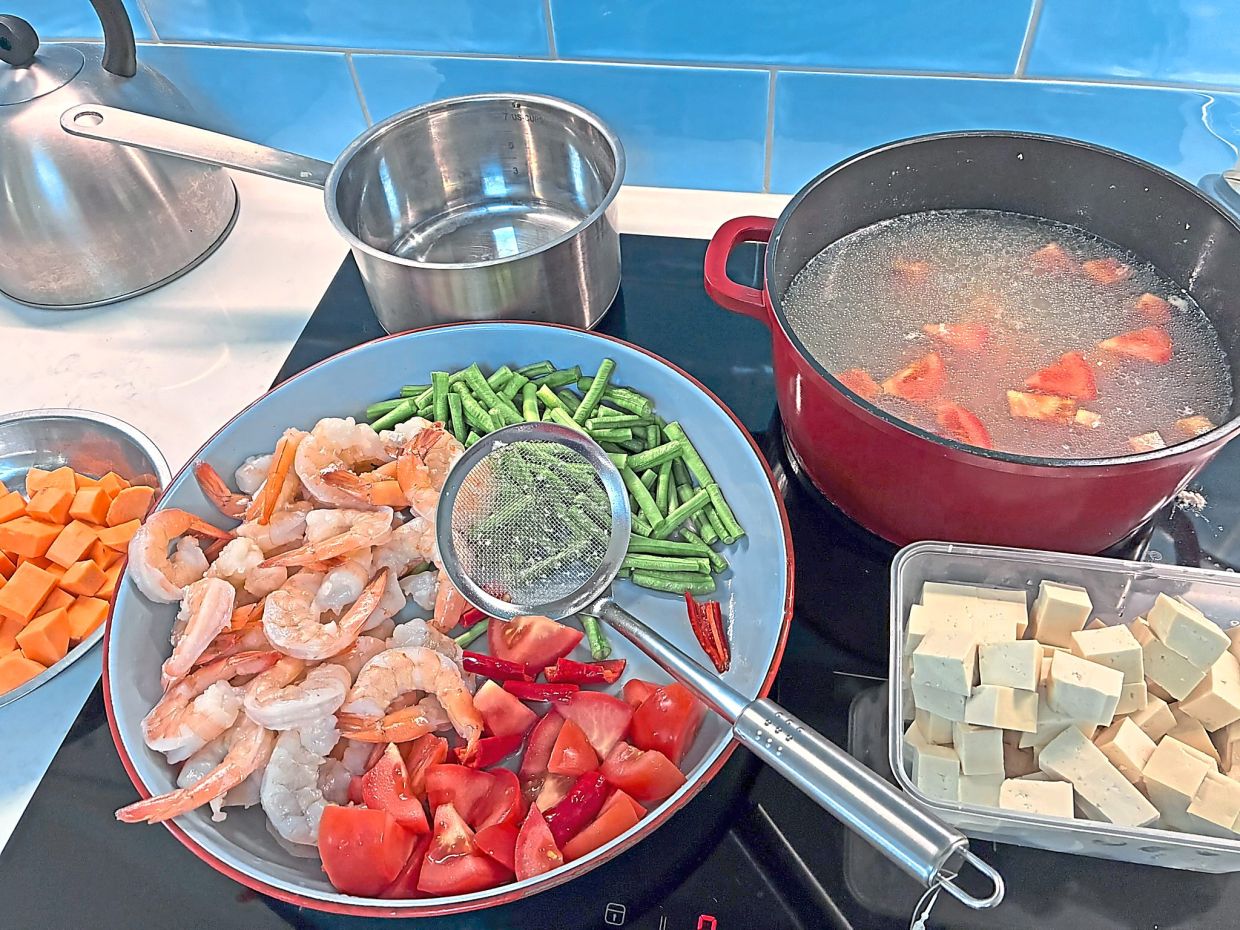
It is a conscious choice. She prepares dishes she grew up with, such as mee Jawa (noodles in a thick sweet potato-based gravy), sotong lemak (squid cooked in coconut milk with sambal belacan) and gulai ayam (chicken in turmeric-infused coconut milk).
These are among the flavours she hopes her Melbourne-raised sons will one day associate with family, home and heritage.
Festive seasons are especially important, and Tan still follows a mental list of what should be prepared for each celebration, much like her mother once did.
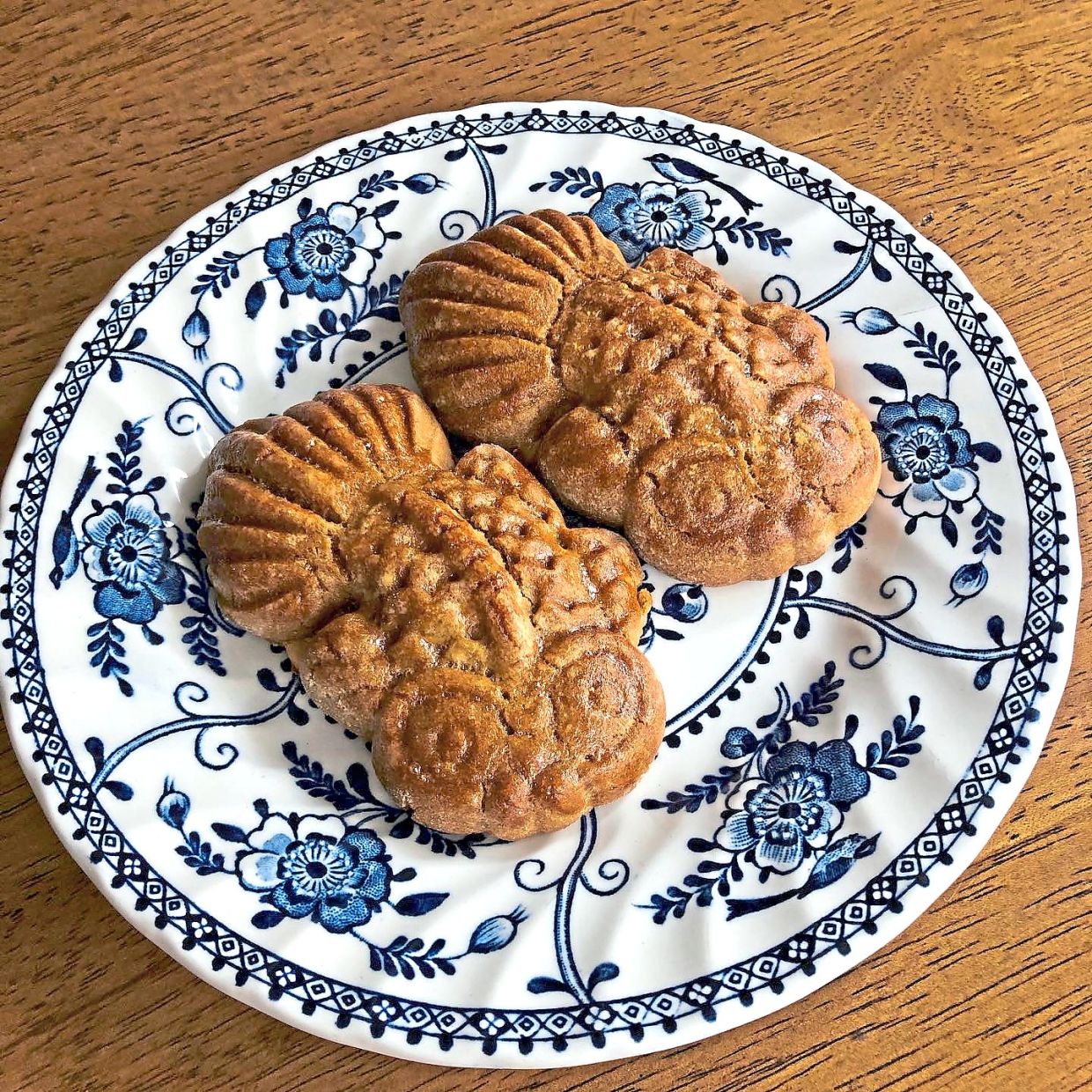
For Chinese New Year, she painstakingly makes traditional treats such as bahulu, kuih kapit and pineapple tarts.
For Winter Solstice, there are rice dumpling balls, while the Dragon Boat Festival season calls for chang, or sticky rice dumplings.
Beyond her family, Tan shares recipes for traditional Peranakan dishes on social media in the hope that others will continue cooking them.
And whenever the family makes a balik kampung trip to Malaysia, a visit to Penang is almost always part of the itinerary.
“We love the food there, of course, but also the vibrant buzz of Penang,” Tan says.
“Even though I never grew up in Penang, I always feel like I am home when I visit because everyone speaks the kind of Hokkien my family speaks.”
Keeping the culture alive
Her growing interest in her heritage – and her desire for her children to know it better – eventually led Tan to join the Melbourne-based Peranakan Association of Australia (PAA).
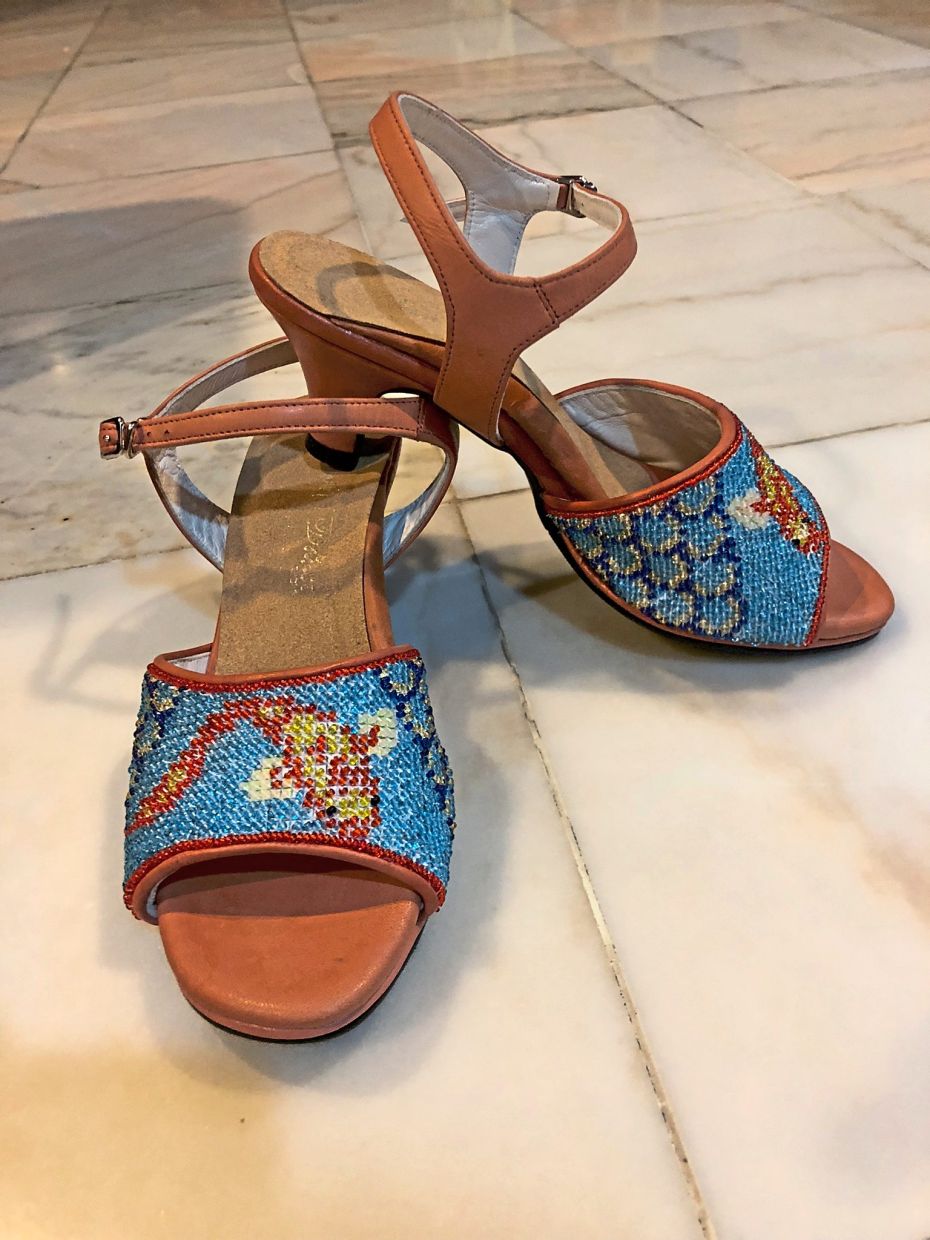
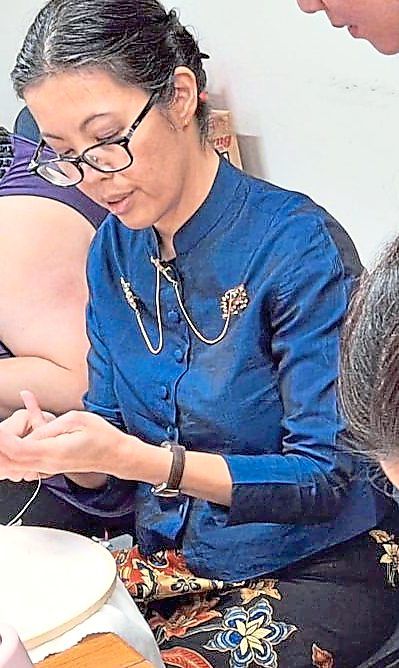
There, she began teaching Nyonya kasut manek (beaded shoe) embroidery classes twice a year, hoping others will help keep the art form alive.
“The more people know and practise this art form, the greater the likelihood it will continue into the coming generations,” she says.
In July, she will curate a Nyonya embroidery exhibition as part of the PAA’s Threads of Heritage event in Melbourne – a talk and showcase featuring cultural expert Cedric Tan, one of the figures behind the successful effort to have the kebaya recognised as a UNESCO Intangible Cultural Heritage of Humanity.
It is the kind of initiative Tan hopes will keep Peranakan culture visible, even as it continues to evolve.
“What will be lost,” she says, “will be the values that underpinned the resilience of the people who created and sustained this harmonious fusion of multiple cultures.
“Some of these values would have served us well going into the future.”
Tan is realistic about how much of her heritage the next generation will ultimately choose to carry forward.
“My kids seem curious but not particularly interested in our culture,” she says.
Yet she remains hopeful. She believes interest often comes with age and experience, just as it did for her.
Looking back, she sees a pattern repeated across generations. The women in her family were not merely mothers, grandmothers and aunts.
They were custodians of memory, carrying recipes that were never written down, customs that were never formally taught and stories that explained who the family was and where it came from.
Today, Tan sees herself stepping into that role.
“I often feel like my sister, my cousin in London and I are the keepers of traditions for our family,” she says.
Whether the next generation will take up that responsibility remains to be seen. But for now, Tan continues to cook, teach, stitch and share, determined that the traditions she inherited will not disappear quietly.
Because, she believes, once the keepers of memory are gone, what remains may be heritage preserved in museums – but no longer a culture lived at home.
