According to data from the National Health and Morbidity Survey 2025, about 85.3% of our senior citizens are not ageing healthily. Only 14.7% meet the criteria for healthy ageing. This is not surprising.
We have seen evidence of this trend around us. The warning bell has rung over and over again, in report after report, in speech after speech by the health minister.
Perhaps we have become immune to these calls to take better care of our health. Perhaps we have too many temptations to fight against. It is much easier to just give in to bad lifestyle habits.
After all, we only live once. Why not throw caution to the wind? Live life to the fullest, enjoy all the bad habits while we can. Maybe we won’t live long enough to pay the price.
Who would want to live to an old age if our body is frail, our mind has grown senile and we are in pain every single minute?
Time to change
But old age doesn’t have to be like this.
Whether we live in the cities, small towns or in the villages, Malaysians are generally aware of what constitutes a healthy lifestyle to age well.
We are constantly reminded by articles on health in the media, in the viral videos that so many of us forward in WhatsApp chat groups, and in the numerous talks and webinars on health.
We know what to do to remain fit and healthy, to avoid diseases and live to a ripe old age. It is common knowledge, and common sense. There’s no secret about it.
Exercise. Be active. Watch what we eat. Get enough sleep. Be socially connected. Take care of our physical and mental health. Avoid stress. Learn to relax. Don’t harbour anger, envy or regrets. Forgive and move on. Easy to advise, easy to listen to, nod and agree.
But, and here’s the problem: How many of us actually put all these Do’s and Don’ts into practice?
Knowing is not doing. Being inspired by what we read does not necessarily translate into being motivated by it. No one wants to live with aches, pains and be dependent on long term aged care.
But motivation requires action. What is the point of knowing something that can help us, but we don’t do anything about it? That knowledge remains passive, of no real benefit to us.
We can easily rattle off a list of what we should and should not do to age well. But all the advice given is useless if it just goes in one ear and out the other. Just blowing in the wind, but never catching it.
For a habit to form, it takes discipline to stick with something until our body gets so accustomed to it, we feel at odds if we skip it. Like brushing our teeth or having a cup of coffee in the morning to start the day.
Take exercise, for example. It requires effort to set aside a certain time to do stretching, strength training or just brisk walking on a regular basis.
We have become so good at making excuses not to do anything that takes effort, like getting up at 6am to exercise. Is laziness or inertia inborn? When we don’t feel up to doing anything that requires commitment, we find excuses for it.
“It’s so boring to exercise alone. I feel tired today; I don’t have time; I have urgent matters to see to; The gym equipment in my condo is so old. My knees hurt.” Take your pick from these excuses.
As for food, it takes almost superhuman effort to watch what we eat. It takes strong will power to walk through the food court in a shopping mall without succumbing to the temptation of donuts, desserts and ice cream lining both sides of our path.
Young Malaysians can’t resist processed food, packaged snacks, flavoured drinks and savouries. They will soon discover the heavy price to pay for years of consuming too much sugar.
Malaysia has the highest percentage of diabetes cases in Southeast Asia. Not a record to be proud of.
According to findings reported in the National Health and Morbidity (NHMS) Survey 2023, 84% of young Malaysian adults aged 18 to 29 were not aware they had diabetes. Unless there is early intervention, we will see a spike in serious complications resulting from undiagnosed diabetes in the years to come. The NHMS 2025 reports 39% of those aged 50 and above have diabetes.
The price of overeating and overindulgence in the wrong food can lead to a host of health issues, including obesity.
When we are overweight, we end up with heart problems. Our heart and our leg muscles have to do more work just to get us to move our body.
Changing habits
We can’t avoid getting older each year, but biologically, those who have followed a regime of looking after their health and paying attention to what they eat and drink tend to age better. They remain fit and energetic, and look 10 to 20 years younger than their chronological age.
A few aches here and there, greying hair and sagging skin are a natural part of ageing, but when we still have our five senses intact, when we are still mobile and have full cognitive function, we are ageing well.
That should be our goal and we should work towards it. Not to do so would mean ending up requiring assistance with activities of daily living, and paying hefty amounts for long term health care and medical insurance.
Listen to our body. It will give us early warning signs if something doesn’t feel quite right.
Some diseases develop silently and get progressively more serious over time. That is why it’s advisable to go for yearly screenings to be on the safe side. Outpatient fees for senior citizens at public hospitals is as low as RM1 to RM5, or free.
There really is no excuse for neglecting our health.
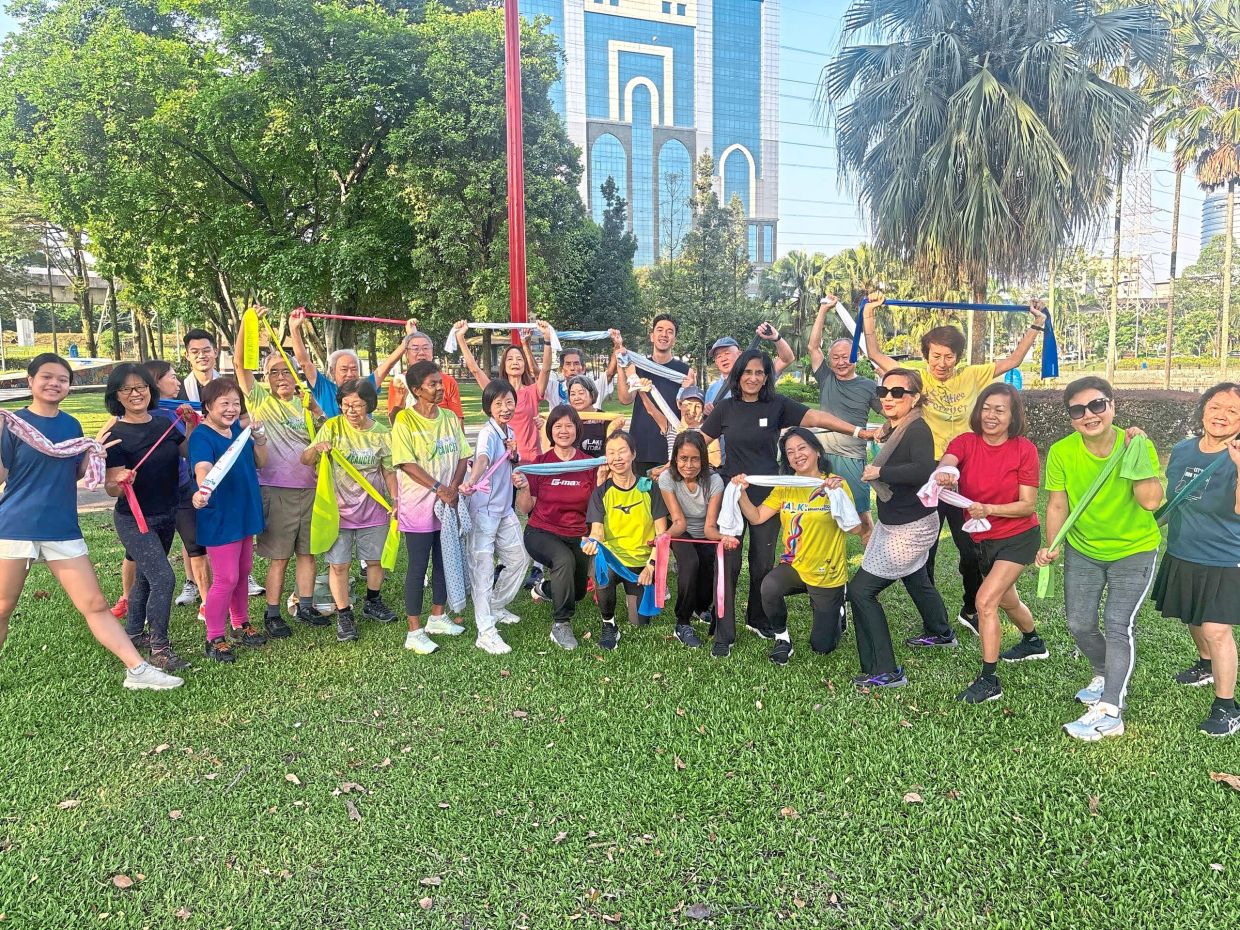
On a more positive note, we are seeing more older adults exercising in the parks, doing taichi, stretching and strength training with resistance bands.
Our Federal Territories Minister Hannah Yeoh has gazetted 539 green open spaces against illegal development. Good news indeed. To quote her, “Green spaces are more precious than gold for the well-being of city folks.”
The facilities in many of these parks have vastly improved. There are clean public toilets and more shelters against the vagaries of weather. There are also outdoor gyms that senior citizens can make use of.
We don’t need to spend much to keep fit and stay healthy as we age. Invest in a good pair of walking shoes, a set of stretch bands of different resistance to strength our muscles.
Drink enough water to remain hydrated, especially during this period of extreme hot weather. Sunlight is free. We need sufficient exposure to it for Vitamin D.
Fresh air is also free, so avoid staying indoors 24/7. No friends to accompany us? No transport? Excuses again!
When we are serious about our health, when we have experienced a medical procedure or surgery that costs us literally a leg, then and only then we wish we had taken better care of our health. But it could be too late.
The longer life span that we have now should come together with longer health span. Quality of life over quantity of years. When we age well, everyone benefits, not just us. Our children don’t have to spend a bomb on long-term care for us. Instead of allocating billions on building more hospitals and nursing homes, the government can invest more on community spaces that promote healthy activities.
Old habits die hard. New habits take time to develop and maintain. Let’s not make excuses. Let’s be serious and commit to adopting an active healthy lifestyle. The payback comes when we can live our retirement years fully mobile, independent and free from the need for long-term aged care. The time to start is now.
Be responsible for our health. No point regretting later when we are lying in a hospital bed, or confined to a wheelchair, with our body racked with pain. It would be too late then.
Lily Fu is a gerontologist who advocates for seniors. She is the founder of SeniorsAloud, an online platform for seniors to connect and enjoy social activities for ageing well. The views expressed here are entirely the writer’s own.