What makes us human – and can that ever be replicated? Playwright Ridhwan Saidi takes on these questions in his speculative sci-fi play Odisi Romansa, where the line between human feeling and android imitation begins to blur.
Presented by Moka Mocha Ink and Ensembel Teater Kaos Nol, the production runs for 10 shows at Damansara Performing Arts Centre (DPAC) in Petaling Jaya from May 8-17.
Part of Ridhwan Saidi’s Teater Normcore series, Odisi Romansa is set in a future where humanity has disappeared, leaving androids to sift through traces of memory, love and time.
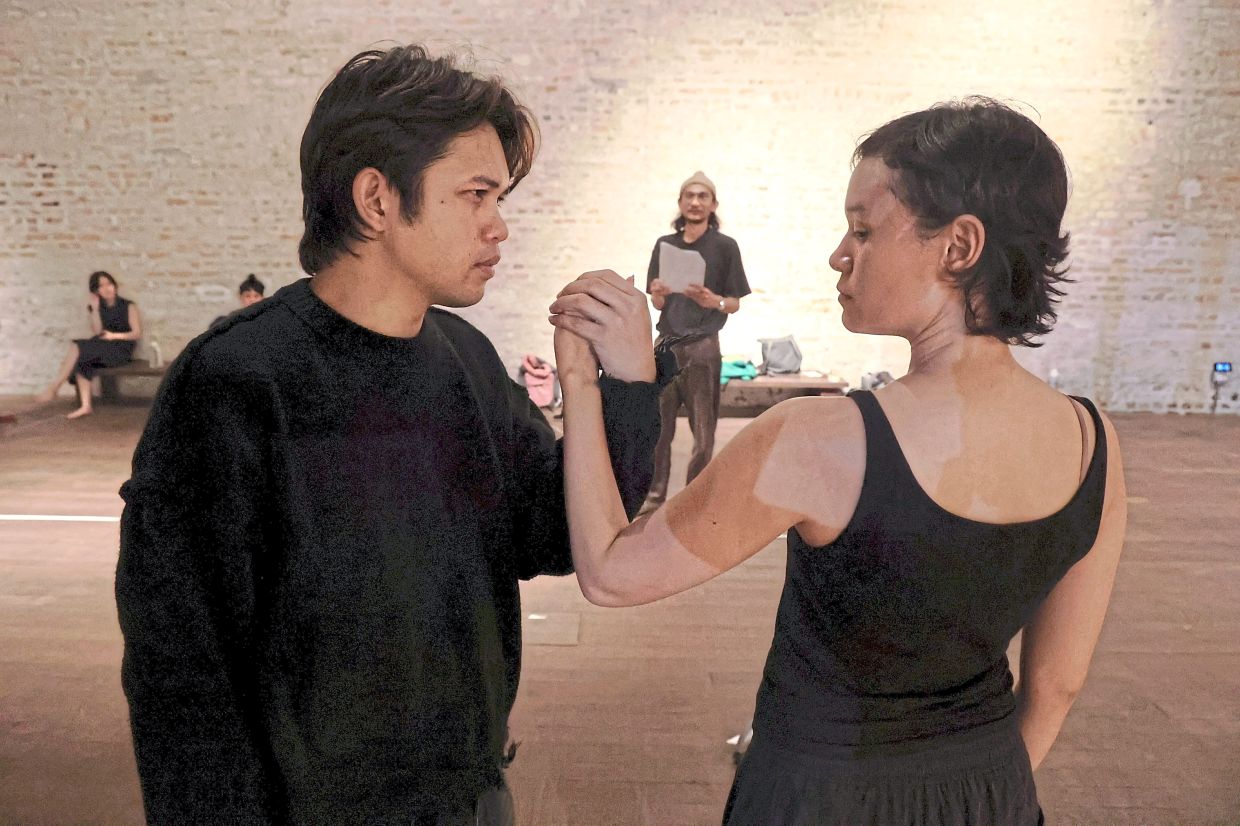
Inside a silent server facility, two androids, Y-002 and Z-001, try to piece together what it means to feel.
As they navigate kerinduan (longing), their physical separation grows vast – one descends toward the primordial gravity of the Bima Sakti’s core, while the other embarks on a pilgrimage from a dying Earth toward a new sanctuary.
The 70-minute performance features a cast of three young actors: Roshafiq Roslee and Lee Qi as the androids Z-001 and Y-002, as well as Aliya Marissa, who makes her stage debut as an earlier version of Y-002.
A four-person ensemble – Irsyad Yahi, Aish Mirza, Gloria Mujan and Rashid Akhmal – also take the stage as puppeteers.
Told in Ridhwan’s poetic yet deadpan style and non-linear form, Odisi Romansa will be performed in Bahasa Malaysia with English subtitles.
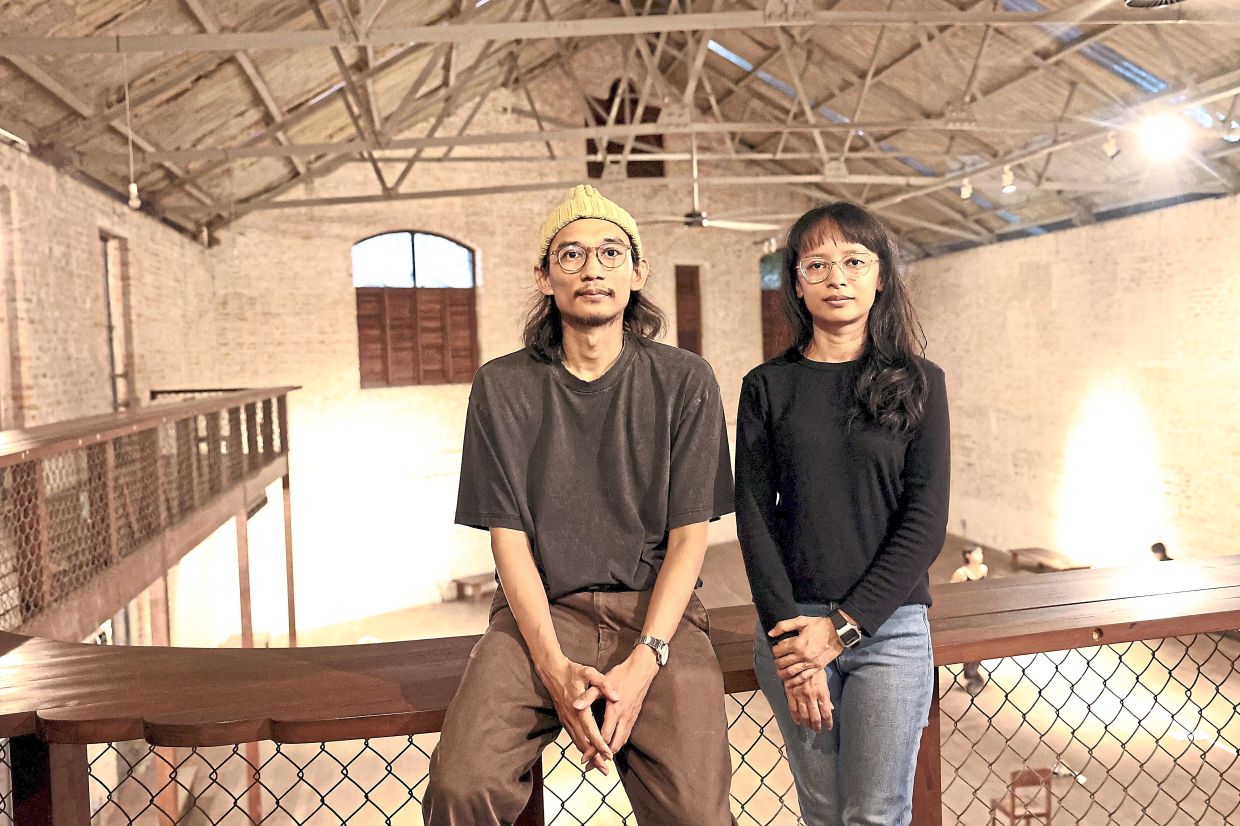
“People often take being human for granted, even with war, the pain we inflict on each other, and the damage we do to the planet in the name of greed. In Odisi Romansa, only recorded traces of human activity remain, so I wanted to explore how these beings – or androids – function,” says Ridhwan Saidi in a recent interview in Kuala Lumpur.
“Since they were created by humans, perhaps fragments of human emotion still linger in them. Throughout the story, they encounter whispering, darker voices as well as a motherly, nurturing presence, even though they cannot literally give birth,” he adds.
The plot draws from Layla And Majnun, an ancient Arab love story, and other Sufi tales of solitude, selfhood and separated lovers.
“In this case, however, the androids struggle to even grasp the concept of love,” says Ridhwan, a novelist, theatre practitioner and filmmaker who has carved out a distinct niche in the local arts scene.
A post-human world
From a sci-fi lens, the 41-year-old director draws on the melancholy of Makoto Shinkai’s Voices Of A Distant Star (2002) and the themes of identity and belonging in Ghost In The Shell (1995).
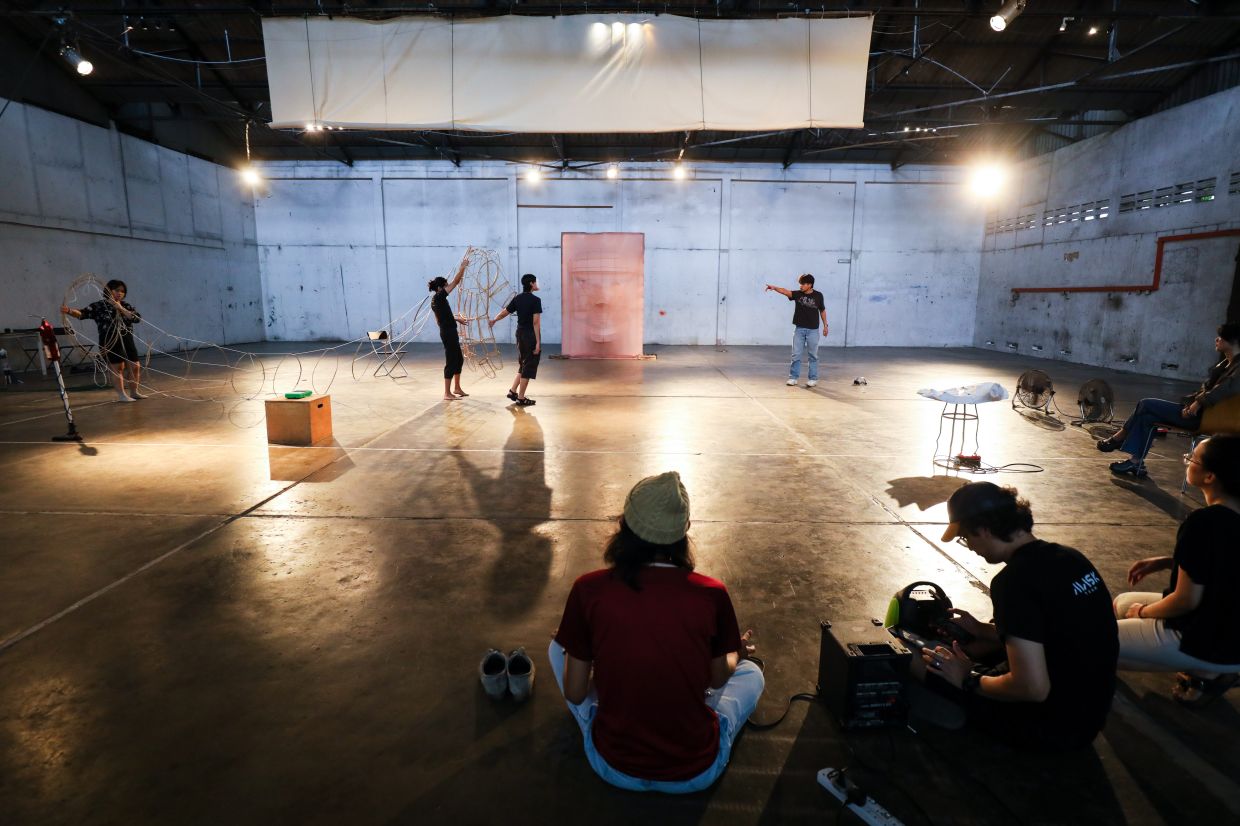
The Odisi Romansa performance integrates visuals by digital collective FabU with live stage acting, alongside a giant puppet by artist-sculptor William Koong (part of the Awas! Mawas! Orang Asli puppet theatre project last year) that plays a key role in the narrative.
According to Ridhwan, who works closely with his wife and producer Nurul Aizam in keeping the production tightly run, the collaboration developed naturally, as he had previously worked with both teams on earlier projects.
“I brought them together to balance digital technology – like 3D-printed masks, projection mapping and live coding – with traditional, handmade rattan stagecraft that highlights the physical act of bringing puppetry to life. It mirrors the story: even in a sci-fi setting, the emotions at its core are primordial,” he says.
Rehearsals have been intense, with multiple challenges converging at once.
“This shift heightens the journey from artificial to organic. As we arrive on a fictional new planet, we’re left to wonder: what if that planet is actually Earth?” says Ridhwan.
The work is supported by soundscapes and music from Eff Hakim, costumes by Nurul Aizam and a set by Liew Chee Heai, completing the scenographic world.
The silent moments
Android Y-002, or Y, which was designed to maintain the server room where human memories are stored, is played by Lee, who describes her character as “inherently task-oriented, responsible and precise”.
“Her android world is highly structured – everything is scheduled, predictable and controlled, with little room for deviation. However, the one trait she seems to discover on her own is curiosity. Through the memories she oversees, she begins to develop a quiet fascination with humanity,” says Lee, 28.
At the heart of Y’s journey in the play is her connection with her soul partner, Z-001, or Z. The distance between them causes their communication to become delayed and uncertain, which introduces a deeper emotional conflict.
“Y begins to question her relevance in his life and what it means to stay connected when time and distance pull people apart. So in approaching this role, I’ve been focusing on the silent moments, particularly ones where conflict, helplessness and even denial can exist without words. It is within these quiet spaces that Y begins to feel most human,” says the Johor Baru-born performer.
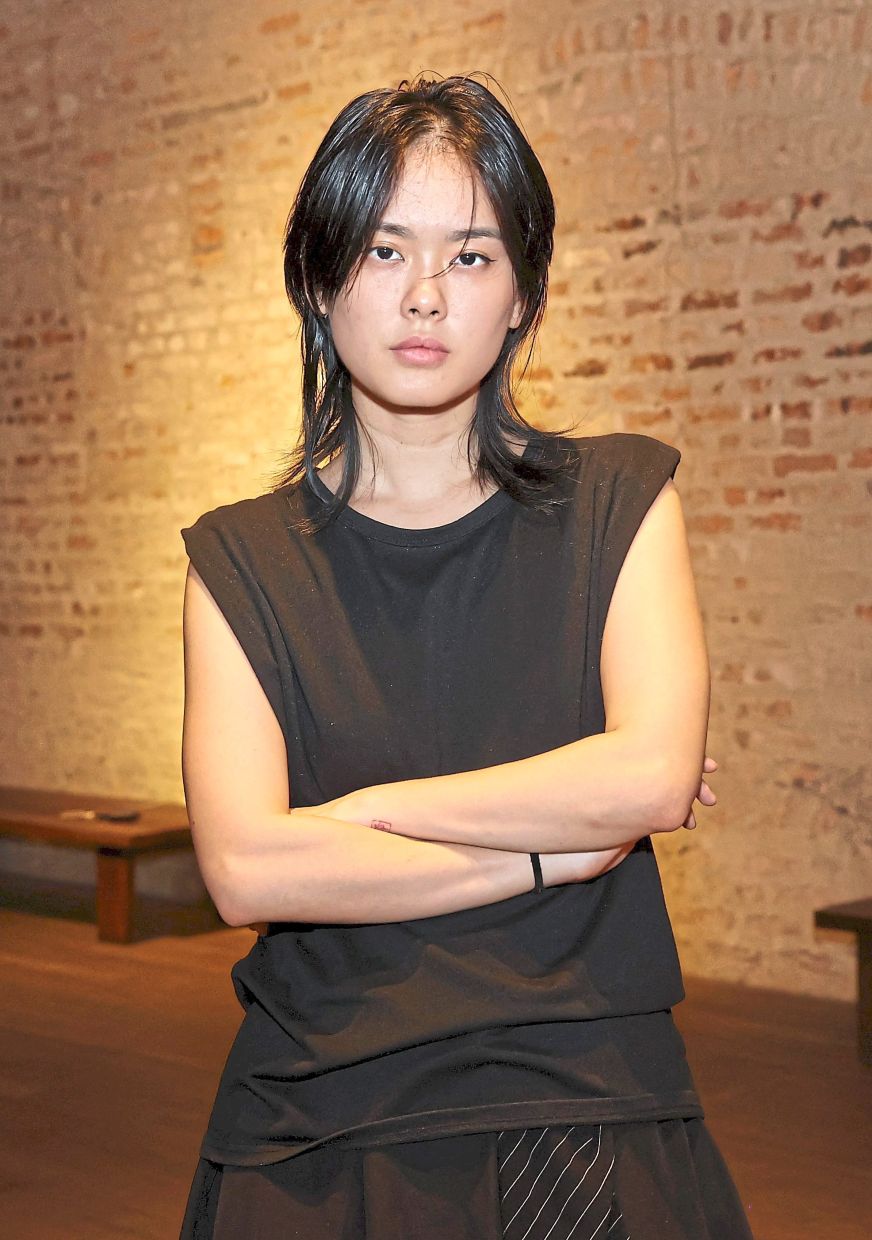
As Bahasa Malaysia is not her first language, delivering the play’s emotionally heavy monologue has been demanding for Lee, both technically and emotionally.
“Since every line carries a specific intention, I’ve had to spend time researching intonation and exploring different ways to express the character authentically. This is also where I have to credit my co-stars, who have been my greatest support throughout the process.
“At the same time, this challenge has been incredibly rewarding. It actually mirrors Y’s journey in learning how to express something deeply human, even when it doesn’t come naturally at first,” adds Lee.
A complex character
Playing Z is Roshafiq, a long-time collaborator of Ridhwan – Odisi Romansa marks his 15th project with Moka Mocha Ink over nearly a decade. The role was written with him in mind after he read an early draft in 2019.
Z is tasked with a space odyssey to study the universe and feed data back into an android knowledge bank, standing in sharp contrast to Y.
The 29-year-old actor from Ipoh, Perak says the main challenge is portraying a complex character within the play’s heavy, multi-layered narrative.
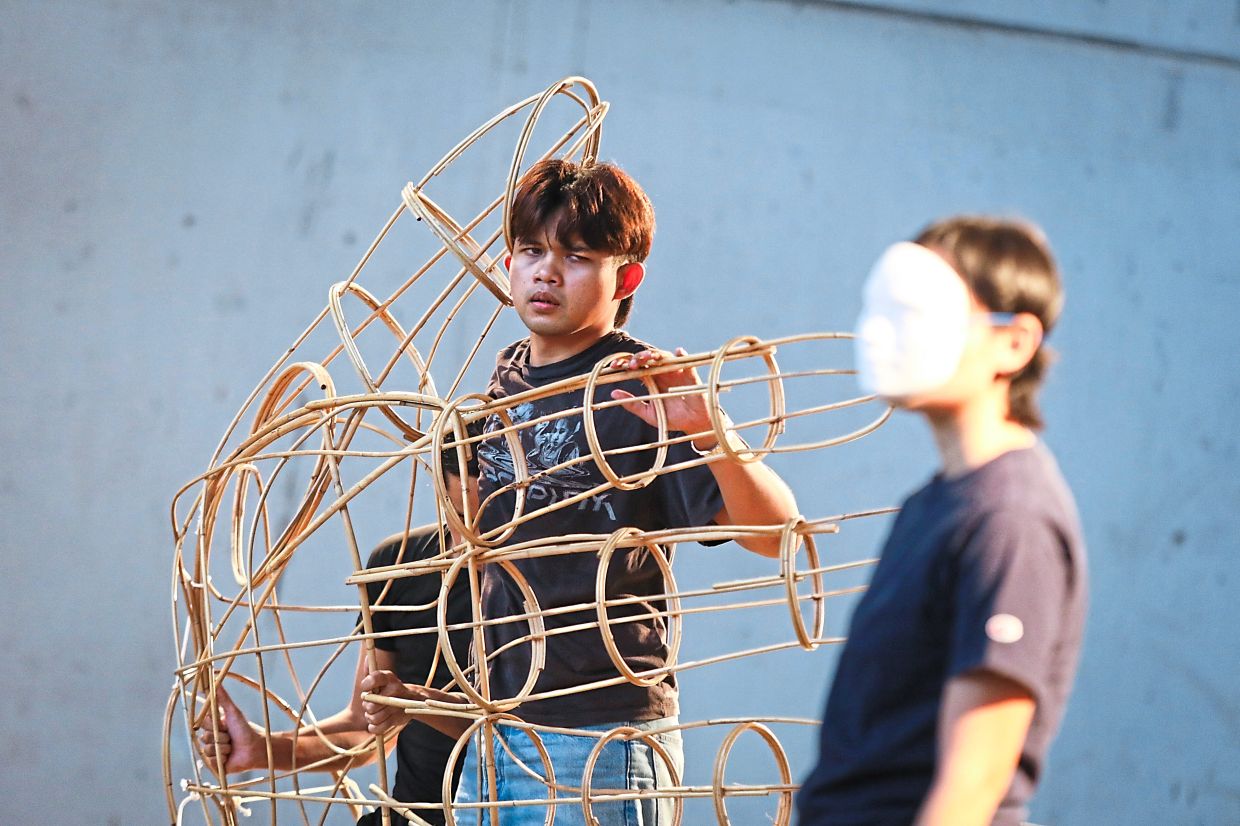
“Z doesn’t really question life, not until Android Y brings it up – and even then, he doesn’t see the need to dig deeper. There’s also a streak of stubbornness and superiority in him; he believes androids are better than humans and shouldn’t aspire to be human, given how humans destroyed the world and themselves,” says Roshafiq.
“Still, Z sees Y as a source of knowledge. Y’s encounters with emotions like rindu and hangat intrigue him, though they initially escape his understanding. It’s only later, when he’s separated from Y and alone, that he begins to grasp them,” he adds.
More than an android
In the 2019 draft of Odisi Romansa, Y was written as a single role.
For the upcoming staging, Ridhwan reworked the character for a double casting: Aliya plays the Earth-bound version travelling toward a new habitable planet, while Qi portrays a newer model adapted to its gravity. Additional monologues were also written for Qi’s version to trace this evolution.
Aliya, 28, notes that Y was never conceived as purely mechanical.
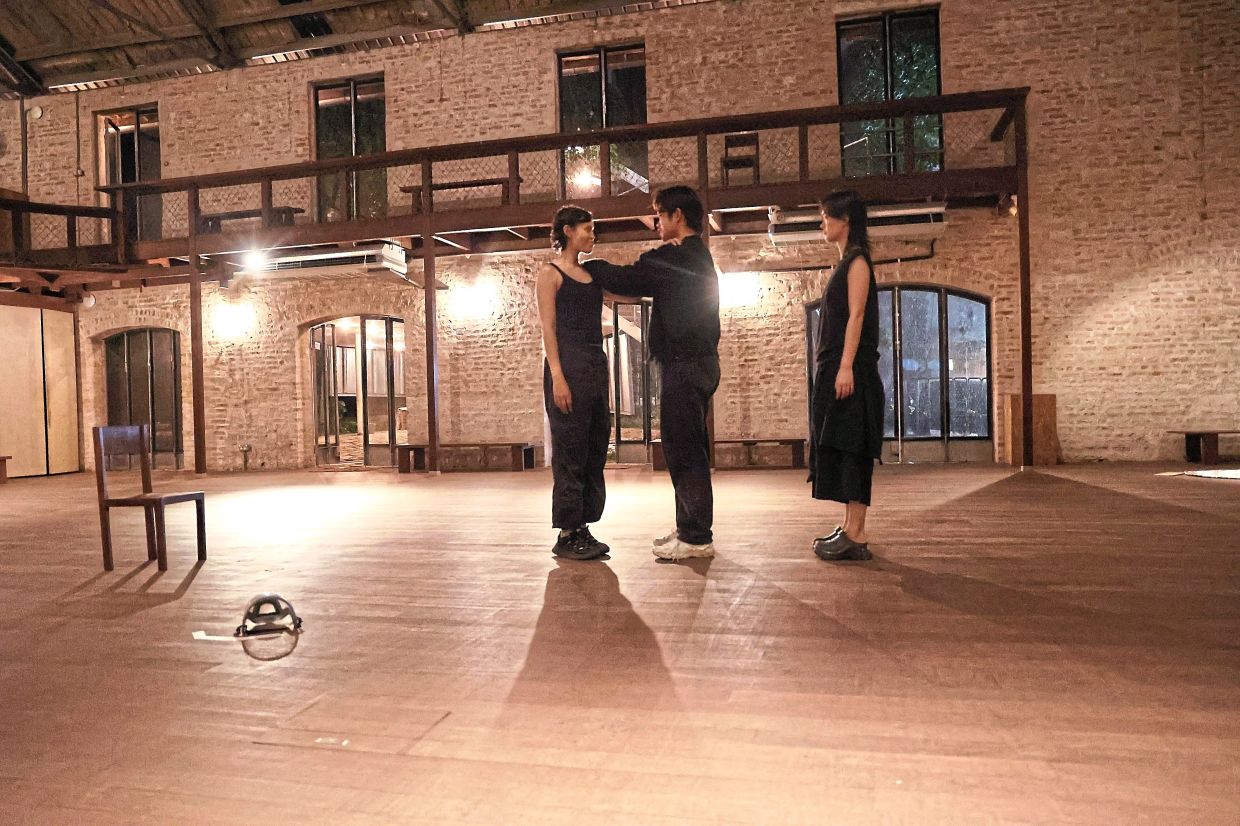
“She’s warm, loving and emotionally intelligent – meant to feel very human,” she says.
“So I focused on movement and expression, with choreography to show her emotional shifts. The hardest part is holding back, letting the feelings sit beneath the surface without over-explaining them to the audience.”
Odisi Romansa was made possible with the support of ArtsFAS (Arts For All Seasons) by Yayasan Hasanah, The Godown KL and Kongsi KL.
Odisi Romansa will be staged at DPAC, Damansara Perdana in Petaling Jaya from May 8-17. More info: cloudjoi.com.